81 Days with the Tao: Verse 5

“Hold on to the center.”

—Stephen Mitchell, Tao Te Ching, Harper Perennial Modern

Classics, 1988

This is the last line in a rather short Verse 5. It follows a series of descriptions of what the Tao is like. It’s like someone who doesn’t take sides; it’s like something that gives birth to both good and evil; it’s like a bellows but very useful. It’s like something you can use but never use up. It’s like something you understand less the more you talk about it.

And then, after this recitation about what the Tao is like, the last line stands alone, apart from the rest of the verse, seemingly unconnected.

“Hold on to the center.”

On a whim, I open another translation of the Tao Te Ching to read this verse—a beautifully illustrated one by Gia-Fu Fen and Jane English. Their verse five bears almost no resemblance to Stephen Mitchell’s. It talks about the ruthlessness of the wise, and of people as dummies. It calls the Tao the “space between heaven and earth,” but it bears some similarity to Mitchell’s translation with its sparse second-to-last line: “More words count less.”

However, the last line is virtually the same: “Hold fast to the center.”

I pull out a third and last translation by Witter Bynner. He uses the word Universe instead of Tao, says men come to their wits’ end arguing about it, but finally counsels entering the “marrow” of things; the essential part, the core—the center!

I’ve decided that comparative study of Tao Te Ching texts is not my cup of tea, and I’m not going to get caught up in it going forward, but I’m captivated by the sameness of the message in the last line across such diverse translations.

What is the center? Why am I admonished to hold on to it?

Is the center physical? Do I feel that my center is in my solar plexus—in the center of my torso, just above my belly button? Or is it in my heart, in the center of my chest? Or my abdomen? Is my mind the center—my consciousness or awareness?

Or is the center I am told to clasp something external to me? Some universal center, the center of life? Is it the Tao, the Way, the Source, God? Are my center and the universal center the same thing? Am I within it, and is it within me?

Did Lao Tzu have something particular in mind as the “center” when he admonished us to hold on to it? Or was he seeking to conjure in us a feeling of centeredness, focus, or mindfulness? Is the center he writes about common or intensely personal and individual? And why does the center matter? It seems to be crucial, especially in times of uncertainty, fear, change, or transformation. What purpose does it serve?

When I close my eyes and ask myself, “What is my center?” I find a place of warm darkness in the middle of my chest, a still place at the core of my being that grounds and steadies me. I call it my awareness. You may call it something different and find it elsewhere. 

So, close your eyes now. “Where is your center?

Whatever you find there, may you hold onto it, and may it calm and anchor you.
81 Days with the Tao: Verse 4

“The Tao is like a well;

used but never used up.

It is like the eternal void;

filled with infinite possibilities.”

—Stephen Mitchell, Tao Te Ching, Harper Perennial Modern

Classics, 1988

In these days of drought and climate change, wells can run dry, so the metaphor doesn’t work as well as it once did. But the meaning remains: The Tao is inexhaustible.

But the void? Completely empty space. Nothingness. That’s another thing altogether. This metaphor perfectly captures the Tao’s limitlessness.

I imagine a night sky, black, empty, without stars. I imagine universes being born from this emptiness, this nothingness—innumerable planets, with incalculable possibilities for life. I imagine our planet, bringing forth all its diversity from the largest mountains to the tiniest grains of sand, from viruses and bacteria to dinosaurs and elephants. Everything is born from the void. Over eons, I, too, have come from the void; so have you.

I think about the proposition that emptiness is the source of all possibility. Makes sense to me. When nothing exists, everything is possible. When nothing is occupying a space, whether that space is physical, mental, or emotional, there is the potential for anything to be born into it. If the cosmos arises from emptiness, perhaps the small empty spaces I open in my life will provide room for creative possibilities.

Lately I’ve been emptying my space, the space of my days, the space of my mind and heart. I’m even trying to empty some space in my home. I’ve been doing so with the long view of my ultimate death. I’ve been letting go of activities, commitments, and objects, trying to create space for possibilities in my life. I’ve been trying to make fewer plans and avoid new projects and obligations. Instead of striving toward a goal, I’m opening time to do nothing: unprogrammed time, a void, if you will.

I’m wondering what might be born into this freed-up space. Never mind infinite possibilities; at my age, as a woman, in this time and place, I’m dreaming about even finite possibilities. What might be born in my new spaciousness? Authenticity, love, humility, insight? Such appealing possibilities! Might there also be pain, loneliness, boredom, and meaninglessness?

That’s the thing about the void. Anything can rush in to fill it. I’m not going to try to soften this reality for myself or for you. Do we want to open to whatever possibilities manifest—welcoming, accepting, learning, and adapting to them?

Unlike many people I know, I’m rather partial to the popular phrase, “It is what it is.”

Here’s the Taoist parable behind that modern-day adage, which I believe captures the spirit of the lines from Verse 4 at the top of this post.  

A farmer’s horse runs away. His neighbors come to sympathize, saying, “Too bad, you lost your horse.” He replies, “We’ll see,” or “It is what it is.” The next day, his horse returns, bringing with it three wild stallions. His neighbors stop by to say, “What good luck!” He responds, “We’ll see,” or “It is what it is.” A few days later, when his son tries to tame one of the stallions, he falls off and breaks his leg. The neighbors come again and express their sympathy: “What will you do without your son to help you on the farm?” The farmer replies, “We’ll see,” or “It is what it is.” A little while later, the army press gang shows up to conscript his son, but since he is injured, they leave him alone and move on. And so on and so forth.

The farmer’s openness to whatever arises mirrors the Tao’s quality of entertaining infinite possibilities without judging any as good or bad.

It’s the nature of possibility that you can’t know exactly what it will mean or how it will turn out. As Alan Watts, an expert on Taoism, sums up: “The whole process of nature is an integrated process of immense complexity, and it’s really impossible to tell whether anything that happens in it is good or bad — because you never know what will be the consequence of the misfortune; or, you never know what will be the consequences of good fortune.”

The Tao is like the eternal void: filled with infinite possibilities. So I’ll keep making room, perhaps not for infinite possibilities, but for the few that matter most to me at this stage in my life—and hope to greet whatever arises with a calm “It is what it is,” or “We’ll see.”

81 Days with the Tao: Verse 3

“Practice non-doing,

and everything will fall into place.”

—Stephen Mitchell, Tao Te Ching, Harper Perennial Modern

Classics, 1988

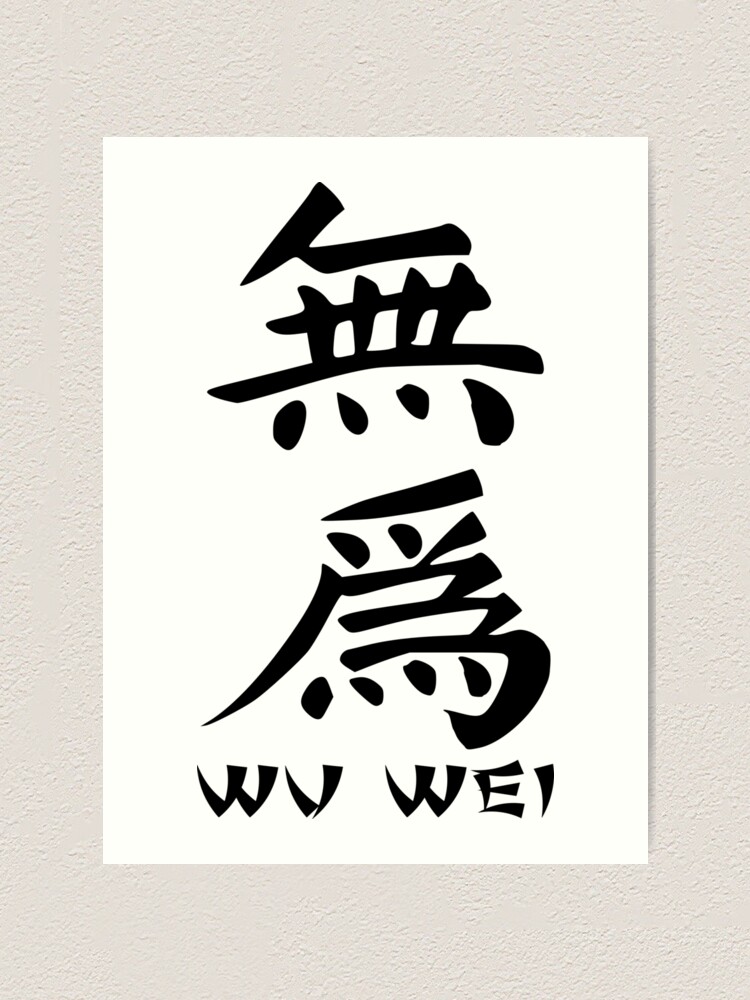
The closing sentence of verse three. It seems unrelated to the lines that come before it. Those lines are an utter puzzle to me, so I focus on the familiar: a restatement of Wu Wei. There’s much more for me to consider on this topic. I sense an invitation to go deeper, to grapple further.

Practice non-doing, non-intervening, non-controlling, non-forcing. How many ways can I think of to say it?

Is it alright not to intervene when a person, a group, or a situation is crying out for justice? Is it alright not to do something to try to save a life? Everything will fall into place? Often what falls into place seems cruel, unjust, or evil. Is it alright not to resist cruelty, injustice, and evil? Or is there some elusive balance to be found, some middle ground between getting involved whole hog, and non-doing? 

I know there are arguments on both sides: violent intervention (as in World War II) or non-violent protest, as in Martin Luther King’s marches. But to do nothing? Not to fight if your country is invaded! Not to peacefully protest the seizure of power and violation of human and civil rights by a corrupt dictator! Not to speak out against racism, sexism, ageism! Not to jump into a river to save a drowning child!

Still, I have done all these things: resisted, spoken out, protested, jumped in—though not into a river— to what avail? Was doing them important even though they brought no change?

Suddenly a way out of this quandary occurs to me. Could the translation of this principle from the original Chinese be the problem here? Not knowing a single word of Chinese, I choose to believe that Lao Tzu was talking about non-forcing, not non-doing. If non-doing can’t be reconciled with justice, perhaps non-forcing offers a different path forward. So, practice non-forcing by following the natural way of things as they fall into place. Much better! But how do we know what the natural way of things is? We are so far from it now.

My attempts to understand this Taoist koan are wearing down my intellectual powers and my wordsmithing skills. I pray for relief, and the phrase “open yourself to the Tao” pops into my mind. Now, I feel my heart unclench, and my body relax. A cool breeze seems to blow through my mind. I let go of the need to know, for sure. I bow to the questions, the dilemmas, knowing we will spar again in the darkness of some future early morning.

81 Days with the Tao: Verse 2

Some lines in the Tao Te Ching bring me up short, not because they’re cryptic, but because they’re shockingly simple:

“Things arise, and she lets them come;

things disappear and she lets them go.”

—Stephen Mitchell, Tao Te Ching, Harper Perennial Modern

Classics, 1988

My immediate gut reaction is, “What a passive attitude towards life and the world!”

It seems to recommend no resistance to what is, at a time when what is feels oppressive and unjust. It suggests letting go of what no longer is, never truly was, or what you wish would be. Let things come and when they disappear, let them go. Is this political and emotional quietism?

I know from reading the rest of the Tao Te Ching that this attitude is a central tenet of Taoism—Wu Wei, non-forcing, effortless action. It’s interesting that it appears so early, in verse two, counseling us from the start to align effortlessly with the ebb and flow of the natural world rather than swimming against the current.

The emphasis, however, is on effortlessness, not actionlessness. Later in the manuscript, I know there will be words about right action arising harmoniously, naturally and effortlessly, eschewing force.

These words encourage me to watch, wait, carefully observe, to understand the way of things, the natural flow. They ask me to cultivate patience and responsiveness rather than reactivity. They say, don’t jump to conclusions, give it time, don’t rush to intervene. But oh, habits of a lifetime are hard to change!

Later in Verse 2:

“When her work is done, she forgets it.

That is why it lasts forever.”

—Stephen Mitchell, Tao Te Ching, Harper Perennial Modern

Classics, 1988

Has all my work, all my striving, come to anything? At death, I’ll have to let it go. Will anyone remember it? Should I forget it too, as this verse counsels? What does it mean that work done and forgotten lasts forever? Does it endure in some hidden, mysterious way? I wrote a blog post a while ago on the Butterfly Effect—the way the tiniest flap of a butterfly’s wings can change things on the other side of the world. Is that what lasting forever means?

I know the message of these lines will return later in the text, counseling me to do whatever I discern as my authentic work in any situation and then let go of the outcome.

I also know that Taoist teachings, like Zen koans, employ paradox—action through non-action, strength through softness, lasting impact through forgetting. And so I stop trying to figure out what the text means and let the words fall like gentle rain on the thirsty ground of my heart.

Let it come, let it go. Let it ebb, let it flow.

81 Days with the Tao: Verse 1

“Darkness within darkness,

the gateway to all understanding.”

The Source, the Tao, is darkness—the birthplace of everything. We come from it, and we return to it. It is the non-being from which our being arises. Close your eyes. Go inside your own dark center and draw near to the center of all.

“Free from desire, you realize the mystery.

Caught in desire, you see only the manifestations.

Yet mystery and manifestations

arise from the same source.” 

—Stephen Mitchell, Tao Te Ching, Harper Perennial Modern

Classics, 1988

Desire is the human condition. So, I, always desiring, am caught among the manifestations, while longing for the mystery. The ultimate desire is to be free from desire itself. How impossible that seems, but only then can I comprehend the mystery. Only then can I realize it; only then is it realized in me. Pass through the gateway; enter the darkness. Perhaps understanding waits there.

I wake up in the darkness. It’s two in the morning. Are you awake too?

It’s dark inside and around me. The sheets are cool, like darkness itself. I lie there, listening. The house is still. Yet I’ve been struggling in my dreams to persuade, convince, free myself from something, or resolve something, and it feels impossible. There is no way out. I am trapped. I know the only answer is to surrender, but I don’t know how. I’m on the verge of passing through the gateway into complete darkness. If I take that step, will I realize the mystery?

“Yet,” that freeing word! “Yet,” that promise of release and deliverance! Ah, “Mystery and manifestations arise from the same source.”  And that source is darkness; blessed, holy, enfolding—the gateway to all understanding. Abide in the darkness, realize the mystery.

81 Days with the Tao: Reflections on the Tao Te Ching

Introduction:

The Tao Te Ching, the classical Chinese foundational text of religious and philosophical Taoism (pronounced Daoism), is believed to have originated around 300 BCE and is traditionally attributed to the sage Lao Tzu. Its title translates as “The Book of the Way and its Virtue.” Taoism centers on living in harmony with the Tao — the natural, spontaneous, underlying way of the universe.

The Tao Te Ching has eighty-one chapters, or verses, most of them shorter than half a page, making them excellent texts for reflection or meditation. I think of the verses, or lines within them, as koans, paradoxical sayings that encapsulate a truth which cannot be grasped through logical reasoning.

I’ve been reading the Tao Te Ching daily for several years—one verse each day, sometimes the same verse for several days in a row. After reading, I close the book (the Stephen Mitchell translation) and reflect on what the words mean in my present situation. Often, a line or two will stand out, and I focus my reflection on those. Sometimes the verse as a whole speaks to me. When I finish reading verse eighty-one, I begin again.

I don’t fully understand the sayings in the Tao Te Ching and the wisdom behind them, but I catch glimpses of reality and hints of the truth. I try to apply the wisdom I glean to whatever is happening in my life at that moment, so each time I read them, they mean something slightly different. I seek to understand and apply them through meditation and writing.

So, here, for the next eighty-one days, are my brief reflections on the Book of the Way and Its Virtue. I share them in the hope they may resonate with your personal experience and encourage you to seek The Way yourself. If your reflections lead you to other or contradictory insights, please share them with me and my readers by making a comment.

Because I don’t quote the entire verse in my blog post, I encourage you to get a copy of Stephen Mitchell’s book and follow along.

Please join me on this eighty-one-day journey.