Alive with Death

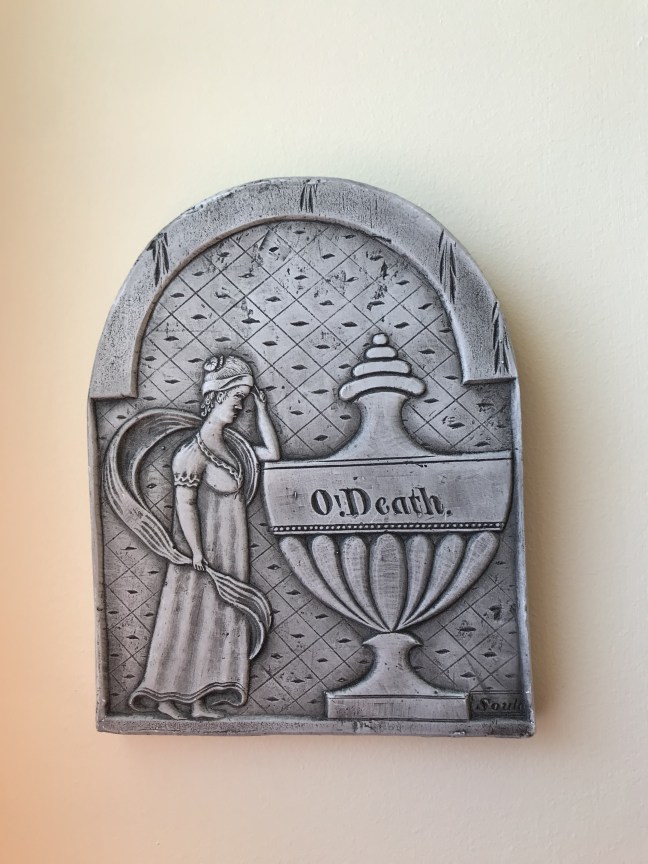
Here’s the paradox: awareness of death clarifies life.

In my introduction to this series on The Five Remembrances, I mentioned the Buddhist practice of Maranasati or mindfulness of death and its benefits in fostering appreciation for life. In practicing Maranasati, I’m discovering that death is one of life’s foremost teachers.

So, I find it helpful to ask myself how the awareness of my inevitable death clarifies each area of my life:  my close relationships, the decisions and commitments I make, my interactions with acquaintances and strangers, how I use my time, how I use my money, what I think, say, and do. Pick any one of these and look at it in the light of your death. When I do so, I find that I have a clearer view of what is vitally important in each situation, what I can let go of, and what I most deeply desire. 

Yes, it makes a difference whether death is imminent or far off, but we don’t know, do we, when we will die. What would you change about how you live now if you fully accepted your death and the uncertainty of the time you have left? You are going to die, that is certain. When you will die is uncertain. How will you live today, knowing those truths?

Someone recommended that I consider how I would choose to live if I knew I had one year left, one month, one week, one day, one hour. So, I made a list.

Moriah, if you had one year left to live, who would you want to be and how would you want to use your time? First, I would want to spend no time trying to change the things I cannot change, which is just about everything except myself and how I choose to live. I would seek every opportunity to love, give generously, be present, and celebrate life. Of course, high on my list of how to use my time would be finishing end-of-life planning tasks for the sake of those left behind. I’d dispose of all my possessions except the essentials for the same reason. I’d hope to finish my novel and memoir because they are a kind of legacy. I’d spend as much time as possible in nature, and I’d want to write goodbye letters or have conversations with those to whom I have something particular to say. (Amusing that I think they might be more likely to listen if I am dying!)

And if you had one month of life left, Moriah? I suspect my energy would be waning, I would be sleeping more, turning inward, and disengaging from events and people. Still, if anything remains unresolved, I would like to try to resolve it, while understanding that it might be beyond my power. I’d like to flow with the process of letting go.

With one week left, I’ll be too weak to do anything but look at what’s around me; I’d like it to be nature. I’ll want to sleep and keep letting go.

One day? Love.

One hour? Love.

If these activities and attitudes become most important when my lifetime is short, are they not crucial for me in this moment as well, when my life expectancy is unknown?

Contemplating death causes me to ponder the meaning of my life. As hard as I have tried to change the world, the difference I’ve made is minuscule.

Still, every breath I take, every move I make has had an unfathomable effect, an irreversible impact. I will never know all my karma. So, while I can consciously change so very little, I am constantly changing everything. I want to do good, promote justice, relieve pain, and make peace, but I find myself with so little power to do so. However, my slightest movement, even my smallest thought, alters the world forever. What an enormous responsibility. What a paradox.

I am going to die. I don’t know when, but I want to be ready. I want, at the very least, to have my arms open to embrace death. I’d prefer for my life to be tidy, organized, complete, and meaningful, at least in my own eyes. It may be, but it may not. If death comes today, there will still be loose ends for sure.

Perhaps this year of focus on death is meant merely to clear the path, to let go of distractions so that the real work can begin. Perhaps this year is the first step, the step close in, as the poet David Whyte would say, the first step in preparation for whatever follows.

This year, I’m meeting monthly with a spiritual companion to discuss my reflections on death. I’m taking a Death Education Course and preparing all the appropriate legal and legacy documents. I’m trying to pare down my material belongings and my organizational commitments to open space and free up time for the essential. I hope to practice letting go of pet beliefs, projects, and habits in myriad situations every day.

I’ve been a Gandhi fan since early adulthood, especially attracted to his principle of the unity of means and ends: “the means are the ends, the path is the destination.” If the means are the ends, then living well is not separate from preparing to die. If the path is the destination, every attentive moment, every time I let go, every act of love foreshadows the way I will die.

Death is not only in store for me at the end of life; it is showing me, here and now, how to live.

Questions for Reflection: If you knew you had one year left to live, what would you stop doing? What would you begin? If you had only one day left, what would matter most? If you had only one hour?

Third Remembrance: Inconceivable Certainty

Moriah, you are going to die.

No, really. Seriously. You are going to die.

This is the one thing you can be certain of.

Death is inconceivable, unimaginable, yet certain. That is the paradox: something that happens to every one of us—something we have known about since our minds became capable of self-awareness—remains fundamentally unknowable.

How do we respond to such inconceivable certainty?

First, by contemplating it as little as possible. Conventional wisdom encourages us to avoid thinking about death, to live as though we will continue indefinitely. Several readers have told me that my posts on aging and death are too much, too intense to dwell upon. They feel compelled to look away.

I understand. The temptation to look away is powerful.

Yet I am convinced that death, the one certainty, deserves a sustained and respectful gaze.

Real-life encounters with death may be frightening, ugly, mundane, or occasionally peaceful, but they reveal little about what dying actually feels like. Death is always happening to someone else, and we cannot enter another person’s experience.

For several years, I served as a hospice volunteer and kept vigil at many deathbeds. During long hours, often in the middle of the night, I watched the work of dying. I hoped these experiences would grant me insight into its mystery, but death remains incomprehensible. What I carried away instead was another paradoxical truth: death is both my unique work and completely beyond my control.

Some people seek understanding through stories of near-death experiences, many of which describe light, warmth, joy, and the presence of loved ones. One friend found comfort in the belief that her beloved grandmother and several cherished pets would greet her when she died. Yet just before her final breath, she became conscious, looked around, and asked, “Where is everyone? I thought they would have come for me?”

Rather than confronting death directly, we often surround it with metaphors. These images may comfort us, but they are necessarily imperfect because we do not know what they point to. Common metaphors include journeys (“walking each other home”), sleep and rest (“every falling asleep is a little death”), transformations (“passing away”), thresholds (the pearly gates), personifications (death as a thief), and natural cycles (winter as the season of death). While intellectually interesting, they all seem like attempts to describe what ultimately resists description.

Despite all the pain, sadness, disappointment, and failure I have experienced—along with joy, of course—I do not want life to end. I want this awareness, this self I call me, to continue in some form. Though I am tired and will become more so as I age, I cannot truly conceive of my own nonexistence. Some people speak of death as peace or rest. I worry instead that it might resemble a never-ending anxiety dream—something with which I am intimately familiar—when I would much prefer it to resemble the complete blankness of sedation for a medical procedure.

This raises a knotty question: Moriah, are you afraid of death?

Not exactly.

I am afraid of pain, disfigurement, suffocation, cold, hunger, sleeplessness, and shame. But death itself? How can I fear something I cannot imagine?

Over time, I have replaced fear with curiosity and experimented with different theories about what death might be.

I once believed in heaven and hell. For a while, those ideas fit comfortably. Eventually, however, they lost their hold on me as I came to see many religious traditions as attempts to understand the divine through human images and characteristics.

As I explored Buddhism and Taoism, other possibilities became more compelling. At present, two concepts compete for my allegiance.

The first is death as nothingness: a vast, dark void. The metaphor for this theory is outer space. I imagine myself floating endlessly in a 1980s-style spacesuit through silent, sightless, senseless emptiness. Yet even here, some faint awareness remains—not awareness of anything, but awareness of nothingness itself.

The second theory is inspired by the law of conservation of energy. In this view, the consciousness I now experience as Moriah does not simply end but transforms into something entirely new and unrecognizable, even to itself. My physical remains return to the earth or ocean, nourishing other forms of life, while whatever energetic essence animates me returns to the source from which all things arise.

I am not especially a fan of The Black Eyed Peas, but the opening track on their 2009 album The E.N.D. has captured my imagination. The lyrics begin:

“Welcome, welcome to the E.N.D. Do not panic. There is nothing to fear. Everything around you is changing. Nothing stays the same … The energy never dies.”

The Buddhist teaching of “no birth, no death” offers a similar perspective. Life and death are not singular events but aspects of an ongoing process of transformation. The concentrated energy that is presently me will disperse and perhaps reassemble into something that will no longer be identifiable as Moriah. Yet it will not disappear.

In that sense, I am infinite.

These theories satisfy my longing for connection with the source of life. They also address my incomprehension of annihilation by allowing for some form of continuation, whether formed or formless.

So I have looked death in the face—there is another metaphor—as best I can for now. I have acknowledged its certainty and its mystery. I have admitted my worry, sadness, and sense of loss when contemplating the end of my life. I have indulged my curiosity. Yet every attempt to explain death through language, metaphor, or imagination ultimately falls short.

I know I will die.

I cannot imagine what death is.

And I cannot look away from it.

What does all this contemplation of death mean for how I live today? Does it shape my daily choices and attitudes?

I will explore those questions in the next post: Alive with Death.

Questions for Reflection: How do we live with absolute certainty about something we cannot imagine? What is your own theory about what happens at death, and what emotional need does that theory satisfy?

No Escape-Only a Path

The Second Remembrance: I am of the nature to have ill health. There is no way to escape ill health.

Ill-health is part of life—one that challenges our illusions of control, inviting us into deeper acceptance, compassion, and understanding.

.        .        .

What, exactly, is “ill-health”?

Something in the body is not functioning as it should. The result may be pain, nausea, fatigue, or an inability to perform basic functions such as walking, breathing, digesting, or eliminating. Ill-health may or may not take the form of a disease like diabetes, multiple sclerosis, or cancer, but it causes a sense of dis-ease.

Why does ill-health happen? The causes may be many, and are often beyond my control: genetics, environment, toxic exposure, or accident. Or, as discussed in the previous post, my body may be wearing out with age. Sometimes there is no discernible cause for ill-health. For those of us used to seeking answers at the tip of our fingers, this can be the most disturbing kind of dis-ease. Though we like to think that if we use our bodies well and carefully, we can avoid ill-health, discipline and preventative action can only take us so far, they do not create an impervious protective shield.

Why do we resist ill-health? We are a control-prone culture. Lack of control can provoke reactions from mild discomfort to intense fear, so we collude with one another to perpetuate the illusion of control. Faced with loss of control over our bodies, we will go to almost any length to reassert it.

Modern Western medicine focuses on control: identify the cause, intervene, cure if possible, and if not, manage symptoms. We tend to consider health our birthright, even as we refuse to recognize health care as a basic human right.  When a cure is possible, we pursue it intensely, sometimes indiscriminately, if we have the financial means. If a cure is not possible, or we can’t afford it, we rebel and rail against our misfortune.  Only as a last resort, we reluctantly accept our ill-health and turn to palliative care—to relieve instead of fix.

I’ve been fortunate. None of my conditions of ill-health is immediately life-threatening, and most are at least partially treatable. Still, since my mid-forties, ill-health has been my reality, and I, too, have struggled before reaching a measure of acceptance.  I inherited Restless Leg Syndrome (RLS) from my mother. Peripheral neuropathy followed on its heels, producing numbness, tingling, and pain in my hands and feet. A couple of years ago, a cardiologist informed me I have lived with hypertrophic cardiomyopathy all my life, but I only recently became symptomatic, experiencing shortness of breath, chest tightness, pain, and fatigue.  I’ve dipped my toe into cancer, skin cancer to be exact, with a melanoma in situ on the right side of my face and squamous cell cancer on my arm. My family has a history of colon and pancreatic cancer, so I have some anxiety about developing these. Add the chronic conditions: GERD (Gastroesophageal Reflux Disease), osteoporosis, and sleep apnea, and the picture of my ill-health is complete. Naming these conditions is, in a roundabout way, part of my attempt to both control and accept them.

I‘ve patched together my own brand of palliative care, combining medications, diet, and exercise. These interventions help me exert as much control as possible; the rest I must accept, because I am of the nature to have ill-health, and more of it as I age.  

But does ill-health bring only negatives and losses, or does it, like aging, also offer opportunities and graces?  What can I learn from ill-health? Are there any up sides?  

At a basic level, ill-health may provide an opportunity to loosen control and soften into self-compassion and empathy with others who share my conditions. It may enable me to touch into my vulnerability, reveal interdependence, and offer a chance to receive care from others.  Or, with a more active approach, I can study my condition, support research financially, or participate in trials that may lead to a treatment or a cure. In this way, I may help others who share my form of ill-health.

I live in a retirement community where most of us are seventy or older. We are all experiencing some form of ill-health, and we are famous for reciting our ailments and their treatments; it’s one of our common pastimes. Even this can have its benefits. Sometimes my ill-health forges a bond with others—an understanding that can, in itself, be palliative.

The Second Remembrance is not only a caution, but also a summons. Like everything else, ill-health may provide an occasion for growth and transformation. Is this not what the Five Remembrances as a whole teach us? What cannot be avoided can be met with curiosity, awareness, acceptance, and perhaps even wonder. So, we face into ill-health, looking for the opening along with the closing, looking for the way through rather than the way out. There is no escape, but there may be a path, otherwise overlooked, toward unanticipated freedom and unexpected meaning.

Before closing this brief essay on the second of the Five Remembrances, let me remind you that my reflections arise, not from formal study, but from meditation and observation—from my attempt to grapple with the choice to intervene or accept, to discern whether to flow with or swim against the inescapable tide.

Questions for Reflection: Is ill-health as inevitable as aging and death? How do I meet ill-health—with resistance, acceptance, or both?  Do I seek to escape ill-health more than aging?  Why?

Of the Nature to Grow Old–B

The First Remembrance: I am of the nature to grow old.  There is no way to escape growing old.

. . .

Aging comes inevitably, step by slower step—inviting us to slow down and move inward, toward acceptance, simplicity, and the essence of love.

I can no longer walk up a hill, heck, even a small incline, without feeling out of breath.

The ghosts of old pains live in my body as diminished fantoms—sciatica in my left leg, rotator cuff pain in my left shoulder, occasional pain in my left lower abdomen.

Unexplained neuralgia has made my feet and hands numb and tingly.  In the winter, I am in danger of frostbite when I walk the dog on days when the temperature is below freezing.  I’ve purchased rechargeable hand warmers.  I haven’t found a solution for my toes, which are perpetually inflamed on the tips. My numb fingers are clumsy.  I’m surprised when things slip through them. I live in fear of dropping a knife on the cat.

My nose runs continuously.  I could single-nosedly keep Puffs Plus Lotion in business.  I drool embarrassingly, noticing only when it is too late.

My neck is constantly stiff; it’s painful when I turn left or right.  Thank goodness for the backup camera on my car!

All this diminishment, though I exercise five days a week: swimming, cardio, weights, and yoga; now and then a little Qigong, and have done so for 30 years.  I eat and drink in moderation.  Sleeping is another matter. 

I feel exhausted doing half of what I used to do.  I used to work in the yard all day long on weekends.  Now, after an hour, I need a nap. When I shovel snow, I must stop to catch my breath every three or four shovelfuls.

All these symptoms of aging require new and creative workarounds. If I can find none, I must let go.  No more mountain climbing, even small ones like Bradbury. I can’t walk the dog or hurry on foot to a meeting after breakfast or lunch.  If I try, I’ll have to stop multiple times along the way to catch my breath. I stopped going out after dinner in the evenings long ago. Many physical activities require planning, asking, “Is it safe, doable, can you sustain it?  What will be the effects the following day?” Travel is complicated: time changes throw my medication schedule off whack, I have to lug my CPAP machine with me, I can’t always find easily digestible food, and bowel irregularity is a problem. Staying home becomes increasingly attractive.

I counsel myself: bundle up, slow down, plan, embrace the inner journey. Celebrate the possible.  One hour of gardening is a cause for delight. Simplify. Rest. Draw the circle closer in, nearer the core of life. At the same time, let your tenderness and compassion ripple further out into the universe. Drill down to the essence of love. Stay there; make it home.

Questions for reflection:  Are you grateful for what remains possible?  Has slowing down deepened your experience of life?  What does it mean to make love your home?

Of the Nature to Grow Old-A

The First Remembrance: I am of the nature to grow old.  There is no way to escape growing old.

The first of the Five Remembrances invites us to face the truth of growing old, and to recognize it as a path toward humility, authenticity, and coming home.


The First Remembrance: I am of the nature to grow old.  There is no way to escape growing old.

Let’s start with the body.  And let’s be ordinary and practical. As the years pass, I change physically. What a cliché—and yet, how true!

My internal organs—heart, kidneys, liver, etc.—wear out from constant work, 24/7/365. Joints need to be replaced. Plaque builds up in arteries, and skeletal injuries worsen.  Sun, wind, water, and chemicals all take their toll. Wrinkles and age spots appear, skin sags, and tears.  My prescription lenses grow thicker; cataracts form and must be removed. Though my hearing continues above average, I watch others struggling, even with hearing aids. My balance is compromised, and I’m slower and less steady. I forget names, words, and appointments, and I can’t express myself as fluently as I once could. I may not have dementia yet, but I’m not as sharp as I used to be.

 If I’ve eaten well, exercised, slept well, have a healthy social network, and engage in meaningful work and activities, I may put off the worst effects of aging until my nineties or even one hundred. But while aging can be managed or delayed, it cannot be escaped. The years stack up inexorably.

Aging is not only physical.  I am seen differently now. No longer am I identified by my education, career, or accomplishments.  Instead, I’m classified as “retired” and viewed as vulnerable, dependent, and without purpose. I’m seen as a liability rather than an asset, a drain on resources rather than a contributor. Not surprisingly, if I’m wealthy, this ageist judgment may be mitigated slightly.

Sometimes, not too often to be a bore, I hope, I may catch myself reciting my resume—former jobs, publications, achievements—or, if I have children and grandchildren, their successes, as if to reassure myself that I mattered; that I still do.   

I may resist becoming dependent and fear being a burden. Perhaps that’s why I keep driving longer than I should, put off using a cane or walker, and don’t admit that I can no longer bend over to clean the bathtub or see the thick layer of dust on the baseboards.  Asking for help makes me feel diminished.

Others might notice that I need assistance and might even offer it, but perhaps I’m stubborn. Help can be expensive, whether one pays for it or asks for it, and refusing it can become its own burden.  If I have the resources to purchase assistance, I can preserve my dignity a little longer. Acknowledging dependence changes relationships. 

Friends drift away, not always by choice. They can’t see to write, can’t hear to call, can’t drive; energy fades, or they die. I may feel lonely and isolated. I could fix that by moving to a retirement community if I have the resources and the courage. Living in community as we age is probably the best option, but the aging process continues relentlessly.  

Aging is not only erosion, though; that’s only half of the story. The glass-half-empty part.

There’s another half to the glass.  I can accept that I am of the nature to grow old.  Acknowledge the drawbacks of aging but embrace the benefits.

I am happier now than when I was young; more content, less competitive and ambitious. I have more time to indulge my creative urges and nurture my friendships.  The inevitable physical decline and the social transformation shaped by cultural norms are offset by a new openness to gratitude, simplicity, and authenticity.

I may feel freer, more comfortable in my skin, and confident. Paradoxically, my physical diminishment is accompanied by an inner expansion, a movement away from the material and toward the spiritual. I may now have the courage to face challenges I once found threatening and therefore resisted or rejected. At the same time, simplicity is more attractive, and rest beckons. 

I have time—glorious time—to sit still, stare into space, do nothing, nap without apology, and love what is right in front of me. I know intuitively that the past can be redeemed by forgiveness and love. The future? Well, it’s unknown, and I waste less time imagining or trying to control it.  Because I know my time is limited, I can more clearly recognize and choose the opportunity that this moment offers.  I’m on a journey home, and I’m getting closer and less afraid of arriving.

My many experiences, both painful and joyous, have mellowed and moderated me. The middle way is more appealing than the extremes. My intuitions have proven true repeatedly, so I increasingly trust myself.  But my failures have humbled me, and I’ve learned that self-compassion is the only path to empathy for others.

These are the graces of growing old—the invitations that aging offers each of us.

So yes, I am frail, vulnerable, and dependent, but I’m also grounded, grateful, authentic, and vibrantly alive. All of these are my nature.  Why should I want to escape?

Question for reflection:   How are you experiencing aging—loss, expansion, or both?

There is no escape

The Five Remembrances (Plum Village Version, Thich Nhat Hanh)

  • I am of the nature to grow old. There is no way to escape growing old.
  • I am of the nature to have ill health. There is no way to escape ill health.
  • I am of the nature to die. There is no way to escape death.
  • All that is dear to me and everyone I love are of the nature to change. There is no way to escape being separated from them.
  • My actions are my only true belongings. I cannot escape the consequences of my actions.

For the past five or six years, every January, I have chosen—or been chosen by—a single word as a linchpin for the year ahead.  It’s called the One-Word practice.  The chosen word becomes the subject of intense reflection, aspiration, and intention.  My One-Words have included: slowly, rest, flow, love, write, and Wu Wei (non-forcing).

My word for 2026 is Death.

“Why do you want to focus so intensely on death?” a friend asked.  I responded that in Buddhist practice, meditation on death is recommended to foster the fullest possible experience of life.  Maranasati, or “mindfulness of death,” reminds us that life is transient and precious and we must live with intention and purpose.

My time is limited, I explained, and I want to live as fully and consciously as possible. My friend and I both admire Mary Oliver, and, particularly, her poem “When Death Comes.”

When it's over, I want to say all my life
I was a bride married to amazement.
I was the bridegroom, taking the world into my arms.
When it's over, I don't want to wonder
if I have made of my life something particular, and real.
I don't want to find myself sighing and frightened,
or full of argument.
I don't want to end up simply having visited this world.

Like Mary Oliver, I don’t want to just pass through life as a visitor.  I want to embrace and inhabit it with amazement.

One way I am practicing mindfulness of death this year is by meditating daily on The Five Remembrances, Buddhist contemplations that acknowledge the inevitability of aging, illness, and death, the reality of impermanence, and the consequences of every action (karma).

I’ve been doing so since the beginning of January: reciting the words of each remembrance, looking deeply into their meaning, reflecting on my experience of each, and writing those reflections in my journal.  The following series of brief articles is based on those journal entries. These posts are not a scholarly exploration of Buddhist philosophy. They are personal and experiential.  I offer them in the hope that they will resonate with others—especially those who are no longer young and are approaching “The Big Let Go,” Death.

Ash Wednesday 2026

“Remember that you are dust, and to dust you shall return.”

Sand, dust?
They’re pretty much the same, right?
I say to myself at the dawn of this
Late February Ash Wednesday
In my solitary refuge
At the beach.

I’ve never liked having black ashes
Smudged across my forehead anyway.
I stopped giving up anything for Lent
Thirty-five years ago
With the justification that
My daily routine was enough sacrifice for anyone.

But that solemn reminder echoes each year this day,
“Remember that you are dust, and to dust you shall return.”
I imagine the mythical god of Genesis,
Scooping up a fistful of dirt
Breathing his moist, fertile breath on it
And molding it into a man.

Then, at the other end of the spectrum,
The Omega end,
I envision my cold, naked body sliding into a furnace and
Burning away to tiny particles of ash—dust.
Grim, but somehow fitting,
The unending cycle of nature is complete.

So, in the bright sun of early afternoon,
This sea, roiled by an imminent storm,
I stroll the brown sand beach,
Pausing every few feet in wonder
At the fury, vigor, and transforming power
Of the foaming, crashing waves.

Somewhere, the ancestors of these breakers
Pounded mountains into boulders,
Pummeled boulders into stones, and
Ground stones into the sand on which I tread.
No less handily will I be reduced to dust
By life’s incessant, blessed battering.

I stop toward the end, near home,
The place I started,
Bend down with an ungloved finger
And draw a cross in the damp sand.
I stand a moment and silently recite,
Remember that you are dust, and to dust you shall return.

Stillness, Silence, and Solitude II

Continued

Solitude

At home, I am not solitary. I live with my spouse, my dog, and two cats, in a vibrant retirement community in a college town where intellectual work, art, theater, and music flourish. Tourists stroll the streets in summer. I am always meeting people I know well—or not at all. This social identity feels so natural, so me, that it is hard to believe it is constructed or conditioned.

Entering solitude, for me, is like going home. Though I am far from my physical home, I feel more at home here. Alone, I am more aware of my feelings, more curious, open, at ease, and forgiving. In the quiet of this cold winter morning, I ask: Who is my essential self? Is it distinct from my conditioned self? Does my essence emerge in solitude, or in relationship with others, or somehow in both? The witness self—the continuous, conscious observer—appears more readily for me in solitude.

Still, I must be careful. I am convinced that truth lies in balance rather than extremes. Perhaps I value solitude so deeply because I have so little of it.

Stillness

I arrived with the hope that my days alone would be unstructured, guided by the heart’s promptings. I imagined staying in my pajamas all day, doing nothing at all. That fantasy dissolved when I decided to bring the dog. I have meandered from one activity to another, discovering that it is far easier to imagine being still than to be still.

What do I want from stillness? The word that arises first is settling. I long for the persistent sense of inner agitation to give way to calm. Through meditation, I have learned that this happens when I sit still for long periods. Buddhist teachings liken the mind to a muddy pond: when left undisturbed, the sediment slowly settles, and the water clears. In my own experience, my body settles first, then my mind, and finally my emotions; clarity emerges.

With clarity, my actions become more intentional. This week, in my efforts to be still, I have taken special care to cook nourishing food and arrange it beautifully in the mismatched bowls and plates I found in the cupboards. I eat slowly—and, of course, silently—savoring each mouthful, noticing flavors and textures, surprised and grateful. No conversation distracts me from chewing thoroughly, to the relief of my delicate digestive system.

I read slowly, reflecting on what I read, appreciating the symmetry and beauty of language, and letting words sink into my consciousness, hoping they will water the seeds of my own writing.

Slowness, I tell myself, is the first step toward stillness, as the dog and I head out on our thrice-daily walks. Snow, ice, and mud slow us down, and we accept and adapt to them all. He stops often to sniff each new scent. I stop too—standing still, looking around, breathing, inhabiting the moment.

Fast and slow, motion and stillness, cannot exist without each other. Neither is inherently good or bad; each has its season, even if I have my preferences.

Silence

It almost goes without saying that outer silence supports inner silence. Alone and still, silence becomes tangible. I soak it in, treasuring it. I resent the heater kicking on with its low hum, the sound of the upstairs neighbor’s truck pulling into the driveway, his boots pounding up the stairs, the clicking of my keyboard as I type. When these sounds subside, I sink into the silence and luxuriate in its nothingness. It wraps around me like the heat in an empty sauna.

For a moment, I imagine never speaking again, never hearing another word. I contemplate the silent emptiness of death, and while I imagine it, I notice a quiet gratitude arise. Then the heater kicks on once more, and I feel my body tense—just slightly—reminding me how much stress accumulates when we are constantly bombarded by sound. How restorative silence feels, with its sisters, solitude and stillness.

And yet, silence is not the same for everyone. If I could not hear, would I long for sound? My partner is functionally deaf. Without her hearing aids, she hears nothing at all. Deaf since early childhood, her experience of silence is marked by alienation, misunderstanding, and disconnection. For her, sound can be orienting and connecting—or overwhelming. She reminds me that silence, like solitude, is not inherently sacred; its meaning depends entirely on context.

As I bring these reflections to a close, I search my OneDrive for a poem I wrote some time ago and read it carefully, recalling the feelings behind the words.


THREE MAGI

Stillness
Silence
Solitude

Three Magi, wise and noble,
Enticed
By intuition,
A common secret dream.
Set off to find the source of all that Is—
of love,
of hope,
of truth.

Stillness ambles imperceptibly.
Motionless, she travels far—
deeper,
nearer,
clearer.

Silence speaks no words,
Adds nothing to the frantic roar
of hate,
despair,
and lies.

Solitude bears destiny as she strides forth.
Knows birth and death and all between alone. Her heart
a pulsing,
throbbing,
longing.

Three Magi,
seeking their soul’s star,
walk home.


What is the soul’s star I seek during this week of stillness, silence, and solitude? As I ponder the question, my witness-self watches thought-clouds drift across the sky of my mind: essential, real, true, authentic, love, compassion, home. Any of these could be my soul’s star. And these three wise magi—Stillness, Silence, and Solitude—are my companions and guides as I walk home.

I rise from the computer and walk slowly to the kitchen to boil more water for tea. The kettle whistles, breaking the silence. The dog stirs, stretches, and hops down from his chair to follow me. I look out the window at the fresh snowfall, still undisturbed. I remember that I have a few more days alone before rejoining those whose lives are bound to mine. I give thanks.

I give thanks.


Author’s Note

This essay grew out of a week-long solitary retreat in central Maine in 2023, and reflects my ongoing spiritual inquiry into stillness, silence, and solitude. Written as contemplative nonfiction, it blends my lived experience with reflective practice. My intention is not to idealize the three s’s, but to examine what they offer when approached with curiosity, humility, and balance.

Stillness, Silence, and Solitude

I wake slowly and fitfully in what I sense is the middle of the night, in an unfamiliar, semi-dark, silent room. I toss and turn in the warm bed until I feel the need to pee, then roll onto my right side to get up. If I were at home, I would open my eyes to the digital clock on the bedside table—but I’m not at home. I’m on a week-long solitary retreat in an Airbnb in central Maine.

The retreat is part of my spiritual theme for 2023: Stillness, Silence, and Solitude. I was drawn to those words at the end of 2022—drawn by a deep longing for those states themselves, and for the transformation they might cause within me if I were to embrace them. Once this visceral yearning rose to consciousness, my practical nature kicked in, and I began looking for a place to be alone. I searched Airbnb and VRBO and ended up with a cozy apartment in a small town about half an hour—and a world—away from home.

No familiar glowing red numbers orient me in the dead of this night, so I make a deliberate effort to determine the time. I reach for my iPhone. 1:01 a.m. At the same moment, I catch a glimpse of an email notification that arrived after I turned out the light at about 9:30. It says:

“I completely agree with Daisy’s approach….”

Suddenly, I am wide awake. Why does this sentence jolt me so fully into consciousness? Because I disagree with Daisy’s approach—or at least, yesterday I had the uneasy feeling that it was naïve, lazy, or even a cop-out. Now my mind is engaged, and experience has taught me that the likelihood of falling back asleep is slim to none.

So I get up to pee, stewing mildly about Daisy’s approach and everyone’s easy acceptance of it, then return to bed and pull the warm covers over my chilled body. I lie there for a while, breathing deeply and saying to myself, Let it go, let it go, over and over, in rhythm with my breath. The stillness of my body and the measured breathing are soothing, and I almost believe I will slip back into sleep. Though my body is calm, my alert mind witnesses my feelings about Daisy’s approach and the emailer’s response, weighing my options for responding—or not.

Finally, I decide to see this early-morning waking as an opportunity rather than a dreary inconvenience—to view Daisy’s approach not as a problem to be solved, but as a stimulus for exploring my spiritual theme in the first hours of this new day. I get up, put on my long johns and warmest wool sweater, and boil water for tea. I intend to meditate first, then write.

After an hour of silent sitting meditation, reading, and journalling—unexceptional, much like my usual start to the day—I feel the urge to write an essay about where I am and why. I record the first moments of this day, an exercise in orienting myself to the here and now. Then I broaden my field of awareness to the larger context of this small Maine town.

As we drove in, it appeared extremely conservative. “How did you know that?” someone asked me later. I answered by pointing to the many American flags displayed everywhere, several with black-and-white stripes and a few bearing the “thin blue line” that often signals support for the police and opposition to Black Lives Matter. There were almost no cars. Pickup trucks sped past me on my walks with the dog. All of this, in my liberal mind, added up to conservatism—perhaps even of the radical sort.

And yet, while self-consciously practicing open-mindedness—and briefly abandoning my pursuit of silence and solitude—I paused to speak with a few locals during my walks. A young fireman at a nearby station waved at me. Thinking we might have something in common, since my family includes a couple of firefighters, I approached him to chat. I began by saying I was a stranger. He told me, among other things, that he was new to town as well and found the people friendly and welcoming. I felt a fresh breeze move through my mind.

Early in the week, I went to the corner store in search of a vegetable peeler. They didn’t have one for sale and directed me to another shop, a ten-minute walk away. As I headed up the road, I heard a shout behind me: “Hey, lady!” I turned to see the young woman from the store waving a vegetable peeler.

“You can have this one,” she said. “We don’t use it anyway.”

“I’ll bring it right back after I peel the sweet potatoes,” I replied.

“No—keep it. Leave it in the B&B for the next occupant.”

We wished each other a nice day, and I continued on my way, struck by her generosity. Nothing, it seems, is as unambiguous as it first appears. I am as guilty of stereotyping as the next person—quick to jump to conclusions based on first impressions, preconceived ideas, and unexamined prejudices.

But the title of this essay is Stillness, Silence, and Solitude. So, I pause my typing to ask myself: what do these insights have to do with those three words? Immediately, it occurs to me that I might not have arrived at these understandings without the space to reflect that stillness, silence, and solitude are providing.

My aim in seeking this trinity of s’s is to encounter my authentic self. Who am I when I am not doing, talking, or relating? I have spent most of my life engaged in activity and conversation. We all have. I wonder who I might be if I sat still, stopped talking, and lived alone. There is a rich spiritual heritage of solitaries who withdrew to caves and deserts—Jesus among them, at least briefly—to face themselves and seek meaning and purpose. Could I place myself, from time to time, in that lineage to do the same, and to better understand what motivates me, why I react as I do, and whether I might want to change some ingrained patterns?

Five days into this experiment, I ask myself: what am I discovering?

To be continued tomorrow

Okay: Part Two

Though I am categorizing this as a story, it is creative nonfiction — based on real events. Names have been changed to protect privacy. Each of us approaches and responds to death uniquely. I want to honor that particularity.

Over the last three years, I visited Sarah about every couple of months.  I’d call or email a day or so in advance, and we’d agree on a time in the early afternoon.  Sarah didn’t see well or move quickly, so I would ring the doorbell, peek in the window to see her sitting in her usual chair awaiting my arrival, and then I’d open the unlocked door and announce myself.  “It’s Moriah.”

“Come in, come in.” 

I’d settle in the chair opposite her, and she’d ask how I was.  I’d tell her exactly what was on my mind at that moment, no matter how personal or difficult it was to admit or express.  Her head shook, and her voice quavered more and more as the months passed, but I listened closely to every word she said in response. I had come to rely on her utter sincerity and genuine concern. I was convinced Sarah, who had only recently become my friend, understood and cared deeply about me.  When I was finished opening my heart, I’d ask about her, and she would tell me—honestly but without drama—the health problems and every day difficulties she was experiencing; not in a complaining fashion, but matter-of-factly, always ending with gratefulness for the simple gifts in her life that brought her happiness.

I learned that Sarah was a Buddhist of Tibetan lineage and that she meditated regularly.  I meditate too, so that created a bond between us.  She told me about her teacher and some of the practices she had learned.  She joined me several times to meditate with a local mindfulness group. She always asked me about my writing and insisted on buying my novel when it was published.  I don’t know if she was able to get someone to read it to her. Her near blindness prevented her from doing so herself.

Sarah was so quiet and undemanding that people may have forgotten she lived in the neighborhood.  She would tell me she felt lonely and she was hungry for news about the neighbors and the goings-on in our retirement community.

She found workarounds for her limitations, though.  A personal assistant helped her with email, bill-paying, and the ubiquitous paperwork that inundates us all. Her daughter, Riley, came every evening to have dinner with her and help with anything that Sarah could not do on her own.

About a month ago, we noticed more traffic in and out of Sarah’s driveway. Riley began coming during the day, as well as in the evenings. Then she started staying overnight also.  I stopped in for a short visit to learn that Sarah was on hospice and declining rapidly.  Riley led me to Sarah’s room, where she was stretched out in a recliner with a cool cloth on her forehead.  She clasped my hand, told me how much I meant to her, and thanked me for our friendship.  She knew her time was short and was ready for death. We were both aware that this was, perhaps, goodbye. 

But it was not. She lived for another week or so, and I saw her a few more times.  The last one was the evening of her death. She was unconscious, breathing very lightly and gently.  While her daughter took a short break, I played a Buddhist chant, hoping that Sarah could hear and understand the reassuring words.  In the early morning, while I slept, a text came in that she was gone.  I saw it as soon as I awoke and rushed to her house in my pajamas to see her one last time, standing by her bed, kissing her smooth forehead and gazing at her peaceful face.

After that, Riley came and went from the house, handling the tasks one does after death: taking care of property, family, and financial matters with the help of Sarah’s personal assistant.  When I was finally able to catch her alone one evening, just before Christmas, she showed me the memorial altar she had lovingly and sensitively created around Sarah’s colorful tree. In the center sat her urn, carved with a Tree of Life.  Surrounding it were photographs and mementos from her life, several that I recognized, and one, a Buddha card I had given her a while back.  The altar was characteristically Sarah—unpretentious and beautiful. 

Sarah told me she was okay after Joe’s death, and I am okay after hers.  Each morning for the forty-nine days of her journey through the bardo or transitional state, I am ringing a bell and saying this gatha in her honor: “Body speech and mind in perfect oneness, I send my heart along with the sound of this bell.  May all who hear it (especially Sarah) be awakened from forgetfulness and transcend all anxiety and sorrow.”  Because everything is impermanent, I am letting Sarah go, along with the bell’s vibrations, into the universe on her journey home to the Source of Life.

The End