Of the Nature to Grow Old-A

The First Remembrance: I am of the nature to grow old.  There is no way to escape growing old.
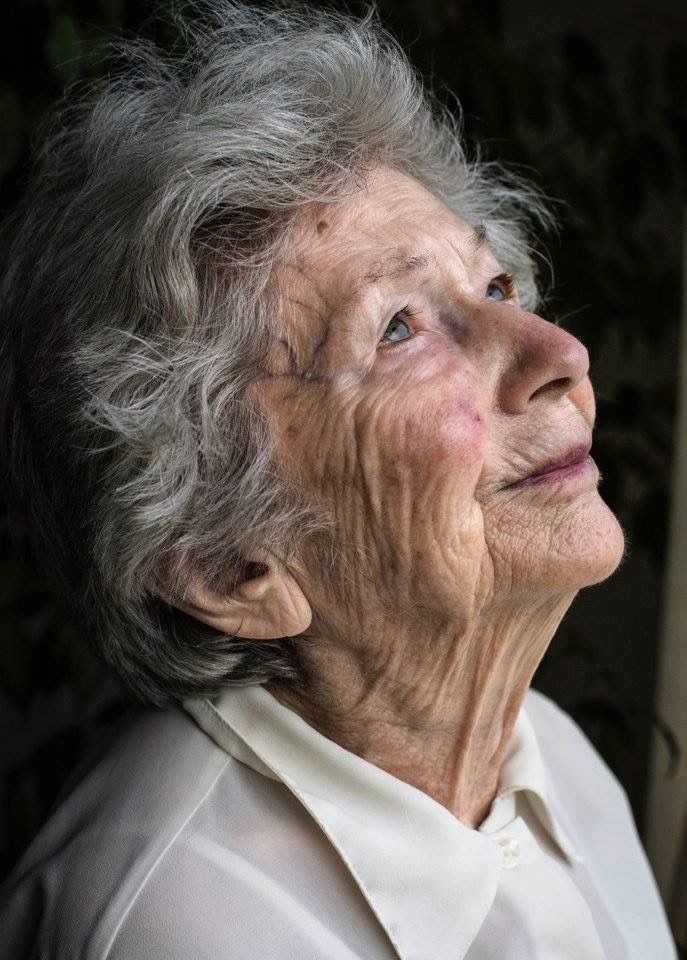
The first of the Five Remembrances invites us to face the truth of growing old, and to recognize it as a path toward humility, authenticity, and coming home.


The First Remembrance: I am of the nature to grow old.  There is no way to escape growing old.

Let’s start with the body.  And let’s be ordinary and practical. As the years pass, I change physically. What a cliché—and yet, how true!

My internal organs—heart, kidneys, liver, etc.—wear out from constant work, 24/7/365. Joints need to be replaced. Plaque builds up in arteries, and skeletal injuries worsen.  Sun, wind, water, and chemicals all take their toll. Wrinkles and age spots appear, skin sags, and tears.  My prescription lenses grow thicker; cataracts form and must be removed. Though my hearing continues above average, I watch others struggling, even with hearing aids. My balance is compromised, and I’m slower and less steady. I forget names, words, and appointments, and I can’t express myself as fluently as I once could. I may not have dementia yet, but I’m not as sharp as I used to be.

 If I’ve eaten well, exercised, slept well, have a healthy social network, and engage in meaningful work and activities, I may put off the worst effects of aging until my nineties or even one hundred. But while aging can be managed or delayed, it cannot be escaped. The years stack up inexorably.

Aging is not only physical.  I am seen differently now. No longer am I identified by my education, career, or accomplishments.  Instead, I’m classified as “retired” and viewed as vulnerable, dependent, and without purpose. I’m seen as a liability rather than an asset, a drain on resources rather than a contributor. Not surprisingly, if I’m wealthy, this ageist judgment may be mitigated slightly.

Sometimes, not too often to be a bore, I hope, I may catch myself reciting my resume—former jobs, publications, achievements—or, if I have children and grandchildren, their successes, as if to reassure myself that I mattered; that I still do.   

I may resist becoming dependent and fear being a burden. Perhaps that’s why I keep driving longer than I should, put off using a cane or walker, and don’t admit that I can no longer bend over to clean the bathtub or see the thick layer of dust on the baseboards.  Asking for help makes me feel diminished.

Others might notice that I need assistance and might even offer it, but perhaps I’m stubborn. Help can be expensive, whether one pays for it or asks for it, and refusing it can become its own burden.  If I have the resources to purchase assistance, I can preserve my dignity a little longer. Acknowledging dependence changes relationships. 

Friends drift away, not always by choice. They can’t see to write, can’t hear to call, can’t drive; energy fades, or they die. I may feel lonely and isolated. I could fix that by moving to a retirement community if I have the resources and the courage. Living in community as we age is probably the best option, but the aging process continues relentlessly.  

Aging is not only erosion, though; that’s only half of the story. The glass-half-empty part.

There’s another half to the glass.  I can accept that I am of the nature to grow old.  Acknowledge the drawbacks of aging but embrace the benefits.

I am happier now than when I was young; more content, less competitive and ambitious. I have more time to indulge my creative urges and nurture my friendships.  The inevitable physical decline and the social transformation shaped by cultural norms are offset by a new openness to gratitude, simplicity, and authenticity.

I may feel freer, more comfortable in my skin, and confident. Paradoxically, my physical diminishment is accompanied by an inner expansion, a movement away from the material and toward the spiritual. I may now have the courage to face challenges I once found threatening and therefore resisted or rejected. At the same time, simplicity is more attractive, and rest beckons. 

I have time—glorious time—to sit still, stare into space, do nothing, nap without apology, and love what is right in front of me. I know intuitively that the past can be redeemed by forgiveness and love. The future? Well, it’s unknown, and I waste less time imagining or trying to control it.  Because I know my time is limited, I can more clearly recognize and choose the opportunity that this moment offers.  I’m on a journey home, and I’m getting closer and less afraid of arriving.

My many experiences, both painful and joyous, have mellowed and moderated me. The middle way is more appealing than the extremes. My intuitions have proven true repeatedly, so I increasingly trust myself.  But my failures have humbled me, and I’ve learned that self-compassion is the only path to empathy for others.

These are the graces of growing old—the invitations that aging offers each of us.

So yes, I am frail, vulnerable, and dependent, but I’m also grounded, grateful, authentic, and vibrantly alive. All of these are my nature.  Why should I want to escape?

Question for reflection:   How are you experiencing aging—loss, expansion, or both?
There is no escape

The Five Remembrances (Plum Village Version, Thich Nhat Hanh)

  • I am of the nature to grow old. There is no way to escape growing old.
  • I am of the nature to have ill health. There is no way to escape ill health.
  • I am of the nature to die. There is no way to escape death.
  • All that is dear to me and everyone I love are of the nature to change. There is no way to escape being separated from them.
  • My actions are my only true belongings. I cannot escape the consequences of my actions.

For the past five or six years, every January, I have chosen—or been chosen by—a single word as a linchpin for the year ahead.  It’s called the One-Word practice.  The chosen word becomes the subject of intense reflection, aspiration, and intention.  My One-Words have included: slowly, rest, flow, love, write, and Wu Wei (non-forcing).

My word for 2026 is Death.

“Why do you want to focus so intensely on death?” a friend asked.  I responded that in Buddhist practice, meditation on death is recommended to foster the fullest possible experience of life.  Maranasati, or “mindfulness of death,” reminds us that life is transient and precious and we must live with intention and purpose.

My time is limited, I explained, and I want to live as fully and consciously as possible. My friend and I both admire Mary Oliver, and, particularly, her poem “When Death Comes.”

When it's over, I want to say all my life
I was a bride married to amazement.
I was the bridegroom, taking the world into my arms.
When it's over, I don't want to wonder
if I have made of my life something particular, and real.
I don't want to find myself sighing and frightened,
or full of argument.
I don't want to end up simply having visited this world.

Like Mary Oliver, I don’t want to just pass through life as a visitor.  I want to embrace and inhabit it with amazement.

One way I am practicing mindfulness of death this year is by meditating daily on The Five Remembrances, Buddhist contemplations that acknowledge the inevitability of aging, illness, and death, the reality of impermanence, and the consequences of every action (karma).

I’ve been doing so since the beginning of January: reciting the words of each remembrance, looking deeply into their meaning, reflecting on my experience of each, and writing those reflections in my journal.  The following series of brief articles is based on those journal entries. These posts are not a scholarly exploration of Buddhist philosophy. They are personal and experiential.  I offer them in the hope that they will resonate with others—especially those who are no longer young and are approaching “The Big Let Go,” Death.

Ageism-A Word for the Wise

Old people and children are two of the most vulnerable groups in American society.  Non-whites, the poor, immigrants, LGBTQ+ persons, the disabled, and women are also exceptionally vulnerable. 

While those of us old folks who can afford to live in retirement communities recognize that we are privileged, if we are realistic, we also acknowledge our vulnerability. Though we may not have thought about it in these terms, vulnerability is the very reason we are here, willingly or not. Perhaps, as in my case, physical limitations and loss of energy made it difficult to maintain or live safely in a single-family dwelling. After the loss of a partner or the deaths of many friends of a similar age, social isolation may become a problem. Many are overwhelmed by exhaustion from caring for a spouse who is ill or dying, and they can no longer carry that burden alone. Some struggle with the subtle shift from taking care of their children to needing support and care from them, and they move to a retirement community to make their lives and the children’s more manageable and less stressful.

Some of us feel more vulnerable than others. Some of us may be in complete denial about our vulnerability. 

The elderly are often considered childlike and are treated like children.  Like children, we may have, or may believe we have, little ability to defend ourselves, and so others can easily exploit or take advantage of us.  We are often considered less intelligent than those in the prime of life due to the stereotype of decreasing cognitive abilities, and therefore, are popular targets for scams and theft. If we are retired, we are regarded as unproductive and, therefore, are considered less valuable to society. In a zero-sum culture, we are viewed as a drain on scarce resources. Of course, these negative views of old people may be mitigated somewhat if we are financially secure, famous, have a long list of accomplishments, or have very accomplished grandchildren!

 The above-listed common attitudes toward old people constitute ageism—discrimination against older people because of negative and inaccurate stereotypes. They lump all older people into a homogeneous category, ignoring the wide variety of strengths and weaknesses of seniors.

Still, whether we admit it or not, the older we get, the more defenseless we become.  We may be able to delay some forms of weakness or decline by eating well, exercising, staying mentally and socially active, or by exerting our formidable power of denial. Still, we ultimately succumb to our powerlessness as we look death in the face.

Most of us succumb to our limitations before then, though.  We appreciate the support we pay for when we move to a retirement community.  Most likely, we moved there expecting life to become easier as the services we have been promised, for the hefty fees, are delivered.  We take it for granted that we will be respected. After all, we’ve worked hard, been esteemed for our achievements, planned carefully, made difficult decisions, and gained some wisdom.  We don’t expect to give up agency in our lives. We assume that an institution ostensibly created to foster graceful aging and funded by the savings of old people will understand and accommodate the needs of the aged in all their variety, subtlety, and complexity. Or we don’t think about this at all. Retirement communities, especially those marketed as independent or active living, may be the last places we expect to find ageism.

However, retirement communities are often owned and managed by those who have not yet faced the vulnerability of aging in their own lives.  The law of averages predicts that some will be run by people motivated by greed, hunger for power, personal and professional insecurity, inexperience, grudges, ignorance, and prejudice. Those who oversee retirement communities are sometimes completely unaware of their ageist attitudes, the subtle and not-so-subtle ways in which they disrespect and take advantage of the elderly.

So, a word of caution to the old and the not-so-old.  First, old folks, don’t be naïve.  Keep your eyes and ears open, assume nothing, and continue to exercise your critical thinking. Don’t take it for granted that your increasing limitations render you powerless. Be on the lookout for ageism in the healthcare system, end-of-life support networks, home care agencies, advocacy groups, and even in the place you call home, such as your retirement community or senior housing complex.  And when you identify it, don’t hesitate to call it what it is and to support one another in resisting it.

Also, be on the lookout for ageist attitudes in and among yourselves.  Statements like “I’m having a senior moment” may seem harmless and may ease an embarrassing situation, but they contribute to the incorrect characterization of all seniors as forgetful and incompetent. Some of us use the mythic forgetfulness of old age as an excuse for our lifelong laziness and carelessness in remembering names. I could be one of those!

Finally, those of you who are not yet old.  Surprise!  You will be one day!  You, too, will be limited and vulnerable.  You will require some degree of support, however minimal. If you foster a culture of disrespect for the elderly now, you will be a victim of that culture yourself one day.  Crass as it may sound, what goes around really does come around.