I’ve come to the end of my short essays on the Five Remembrances, though I have certainly not completed my contemplation of aging, ill health, death, impermanence, and karma.
Several of my readers have expressed concern that such an intense focus on these subjects might be mentally and emotionally unhealthy. For some, reading these reflections has been a downer; for others, it has provided an opportunity to face fears and cultural taboos and to explore new emotional territory. Some are curious about why I undertook this focus and what effect it has had on my life over the last six months. So, here are some answers.
Why do this? Why now? How?
It has been my lifelong inclination to face difficult truths about myself and the world around me, rather than avoiding or deflecting them. My fascination with death stems from a natural curiosity about a mystery that no one seems to have solved. It feels rebellious and even somewhat subversive to look directly at something that most people would rather look away from. Those who know me well are not surprised when I raise uncomfortable truths.
Several factors contributed to the decision to focus my attention on death in 2026. I have previously mentioned that for the last couple of years I have participated with several other women in an online discussion group focused on aging. This group provided an outlet and support for facing common problems as we age. However, we seemed to shy away from discussion of our mortality.
Then, last fall, my church sponsored a series of discussions about death, focusing on advance directives, end-of-life planning discussions with family, funeral arrangements, and dealing with grief. It was a good introduction but seemed to me and a few others to dance around the subject of our mortality. A smaller facilitated discussion hosted by the church this spring came closest to exploring feelings about our own deaths and our experiences with the deaths of those closest to us.
Meanwhile, my retirement community is currently hosting a program on death led by Leona Oceania, founder of Die Well Death Education, comprised of thirteen two-hour sessions conducted over thirteen months. The room is packed for every session!
This trifecta of opportunities intersected with my personal realization that my time is short. I’m 74; both parents died of pancreatic cancer at 84 and 90, so my life expectancy is about 12-15 years. That’s a relatively short time in my lifespan. It is possible, even likely, that I may experience serious pain and discomfort leading up to death. Suddenly, the questions of how I want to spend my remaining healthy years, and how I might deal with illness when it arrives, became urgent.
I asked myself how I would approach the exploration of these questions, and my Buddhist practice provided a ready suggestion. My reading had made me aware of the Five Remembrances and the practice of Maranasati, which I introduced in the first article in this series. The Remembrances would provide the structure and arc for my reflections.
So what? What difference has it made?
Looking back on the last six months of meditating on and writing about the Remembrances, I ask myself whether this practice has affected how I live daily life. Are there practical and transformative impacts to pondering aging, ill-health, death, impermanence and karma?
For me, there have been several.
During this period, I’ve often found myself stopping in the middle of a walk with my dog or on my way to an early-morning workout, looking around me with fresh eyes, listening intently to the silence of falling snow, the sound of birds, or the rain. In those moments, I felt deeply aware of the world’s beauty and the intense joy of being alive. I recognized and experienced my place in nature. The ability to stop, tune in to the reality of the moment, and feel grateful to be alive has grown over the months.
While accepting the inevitable—whether it be wrinkles, sickness, death, change, loss, or consequences—takes a certain degree of daring, determination, and discipline, the most compelling motivation for coming to terms with all of these is this: the sages of all ages and religions have promised that doing so wakes you up to the essence of life. I still have much to see, do, and understand. I want to heighten my awareness to have the best possible chance of experiencing everything. So, it is now common for me to silently say to myself several times throughout the day, “Moriah, you are going to die? This may be the last time you see, hear, taste, smell, or feel this. Pay attention, appreciate it fully.” And, I do.
Contemplation of death has revealed what I truly fear: pain, disfigurement, suffocation, cold, hunger, sleeplessness, and shame. Recognizing and naming those fears is the first step in relaxing their grip. It has been revelatory that death is not one of them.
Rather than fearing death, I’ve come to realize that contemplating it brings a deep feeling of sadness and loss—sadness at the loss of my most precious possession, my consciousness, my awareness. I wonder if mourning this loss now is a facet of my personal death work.
Contemplating impermanence has made me more conscious of the things I cling to. So, I have become more aware of the ordinary things I am challenged to let go of—my desire to see a situation resolved, my need for my contribution to be recognized, my wish to remain in a friend’s good graces, my plan for the day. The frequency with which I am required to let go convinces me of how much I am holding onto. Though intellectually, I recognize that control is an illusion, practically, I’m still operating in control mode. I have more work to do.
A powerful “letting go” metaphor emerged recently in a vivid dream. I stood beside a sheer cliff with the ocean at its base. I was aware of an intense desire to reach a destination beyond the cliff, one that felt like home. The only way to get there was to climb along the almost smooth rock, clinging to the few tiny hand and foot holds carved into it. Crossing without falling seemed impossible. But I had no other choice, so I began the climb, gripping each crevice with all my strength and concentration. About halfway across, I looked ahead and saw that there were no more cracks to cling to; the surface was completely smooth. I could not proceed. I knew I had two choices: to go back or to let go. I let go. And then I woke up.
Life in a retirement community surrounds me with the realities of aging and death daily. It’s impossible to avoid them. Death comes often to my friends and neighbors, and because it is such a frequent occurrence, it is always top of mind. This, for me, is a plus, enabling me to learn from my peers how to age and die gracefully and peacefully, and how to cope with separation from those we love. Observation is an excellent teacher.
Also, I have recently wrapped up a five-year stint as a hospice volunteer and had the privilege of accompanying many clients on their end-of-life journeys. Being near folks who are dying, especially sitting at their bedsides for long hours in the middle of the night, has familiarized me with the signs and stages of dying. It has formed my understanding of the work of dying, the solitariness of the process, and the range of death experiences. All of this has encouraged me to consider my own last wishes and prepare the appropriate associated documents.
The last of the Five Remembrances has prompted me to ponder the importance of the energy I emit into the world, the footprint I make and will leave behind, the things I can and cannot change, and the healing power of forgiveness.
So, I’ve begun to consider the next decade as my end-of-life journey, and 2026 as the first steps on that path.
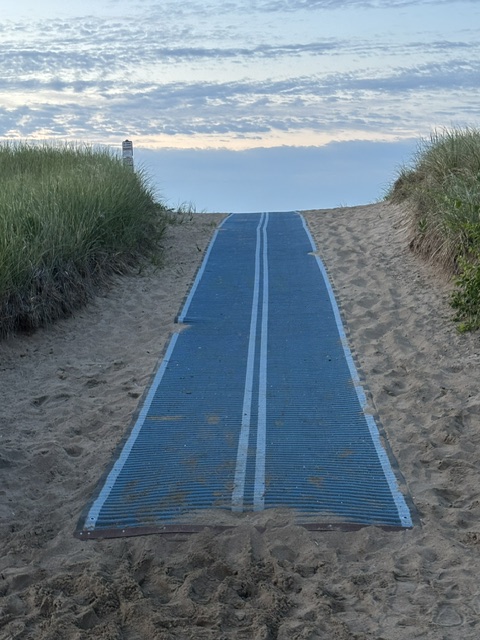
A spiritual companion suggested the image of a threshold to mark the transition into this journey. I used it in meditation, imagining myself approaching, contemplating, leaving behind the old, stepping through, and hovering just inside the threshold of this new season of life. I created a slideshow of photographs I’ve taken over the years that suggest the crossing of thresholds—movement through an opening, leading towards something new—set it to music and meditated on the photos as they cycled through their sequence. This became a ritual marking the transition to a new reality, one where I embrace death as the culmination rather than the end of life.
I will wrap up with a koan from the Tao Te Ching, Chapter 33, Stephen Mitchell’s translation.
“If you stay in the center and embrace death with your whole heart, you will endure forever.”
A koan is a paradoxical anecdote or riddle without a solution, used in Zen Buddhism to demonstrate the inadequacy of logical reasoning and provoke enlightenment. Koans are meant to be repeated, pondered, forgotten, remembered, abandoned, despaired of, and rediscovered until their meaning is written in the heart, not the head.
As I step into this new season of life, I find myself opening to the koan’s invitation: to stay in the center, to meet death wholeheartedly as a profound teacher. The Remembrances have challenged me to stay at the center of awareness, tenderness, and the intent to live fully in the time that remains. If accepting impermanence softens our grip on what cannot be held, it may also enhance our appreciation for what is passing through right now. So, I offer these reflections not as conclusions but as invitations to step across the threshold into the next season of your life, and ultimately, into forever.
Questions for Reflection:
- How does acknowledging my mortality change the way I move through an ordinary day?
- What fears arise when I imagine the end of my life, and what happens when I name them honestly?
- In what moments do I feel most vividly alive, and how might awareness of impermanence sharpen those moments?
- How do I want to show up in the final season of my life, and what small practices today might prepare me for that?
- Where do I sense a threshold in my own life, and what might it mean to step through it with intention?
~~~~~~
I mentioned that I have been taking a death education course from Die Well Death Education. A few weeks ago, I interviewed the founder of this organization, Leona Oceania, intending to introduce her and her work as the final article in this series on death and the other Remembrances. She is a kindred spirit in her fascination with and respect for death, and I hope that her story will add some perspective to my own. Look for that in my next blog post. Then I will move on to other topics, though I can’t promise I will not return to death before 2026 is over.