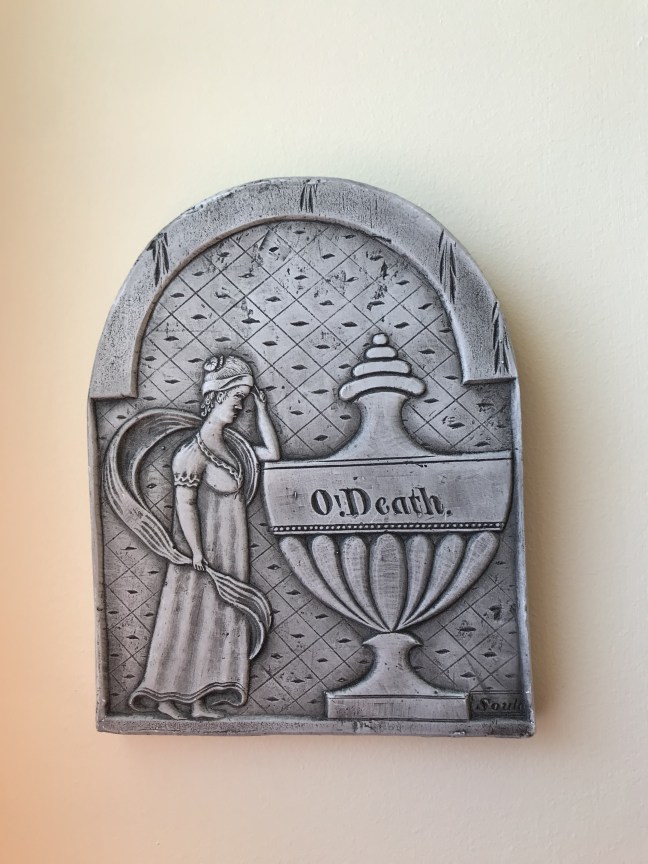
Here’s the paradox: awareness of death clarifies life.
In my introduction to this series on The Five Remembrances, I mentioned the Buddhist practice of Maranasati or mindfulness of death and its benefits in fostering appreciation for life. In practicing Maranasati, I’m discovering that death is one of life’s foremost teachers.
So, I find it helpful to ask myself how the awareness of my inevitable death clarifies each area of my life: my close relationships, the decisions and commitments I make, my interactions with acquaintances and strangers, how I use my time, how I use my money, what I think, say, and do. Pick any one of these and look at it in the light of your death. When I do so, I find that I have a clearer view of what is vitally important in each situation, what I can let go of, and what I most deeply desire.
Yes, it makes a difference whether death is imminent or far off, but we don’t know, do we, when we will die. What would you change about how you live now if you fully accepted your death and the uncertainty of the time you have left? You are going to die, that is certain. When you will die is uncertain. How will you live today, knowing those truths?
Someone recommended that I consider how I would choose to live if I knew I had one year left, one month, one week, one day, one hour. So, I made a list.
Moriah, if you had one year left to live, who would you want to be and how would you want to use your time? First, I would want to spend no time trying to change the things I cannot change, which is just about everything except myself and how I choose to live. I would seek every opportunity to love, give generously, be present, and celebrate life. Of course, high on my list of how to use my time would be finishing end-of-life planning tasks for the sake of those left behind. I’d dispose of all my possessions except the essentials for the same reason. I’d hope to finish my novel and memoir because they are a kind of legacy. I’d spend as much time as possible in nature, and I’d want to write goodbye letters or have conversations with those to whom I have something particular to say. (Amusing that I think they might be more likely to listen if I am dying!)
And if you had one month of life left, Moriah? I suspect my energy would be waning, I would be sleeping more, turning inward, and disengaging from events and people. Still, if anything remains unresolved, I would like to try to resolve it, while understanding that it might be beyond my power. I’d like to flow with the process of letting go.
With one week left, I’ll be too weak to do anything but look at what’s around me; I’d like it to be nature. I’ll want to sleep and keep letting go.
One day? Love.
One hour? Love.
If these activities and attitudes become most important when my lifetime is short, are they not crucial for me in this moment as well, when my life expectancy is unknown?
Contemplating death causes me to ponder the meaning of my life. As hard as I have tried to change the world, the difference I’ve made is minuscule.
Still, every breath I take, every move I make has had an unfathomable effect, an irreversible impact. I will never know all my karma. So, while I can consciously change so very little, I am constantly changing everything. I want to do good, promote justice, relieve pain, and make peace, but I find myself with so little power to do so. However, my slightest movement, even my smallest thought, alters the world forever. What an enormous responsibility. What a paradox.
I am going to die. I don’t know when, but I want to be ready. I want, at the very least, to have my arms open to embrace death. I’d prefer for my life to be tidy, organized, complete, and meaningful, at least in my own eyes. It may be, but it may not. If death comes today, there will still be loose ends for sure.
Perhaps this year of focus on death is meant merely to clear the path, to let go of distractions so that the real work can begin. Perhaps this year is the first step, the step close in, as the poet David Whyte would say, the first step in preparation for whatever follows.
This year, I’m meeting monthly with a spiritual companion to discuss my reflections on death. I’m taking a Death Education Course and preparing all the appropriate legal and legacy documents. I’m trying to pare down my material belongings and my organizational commitments to open space and free up time for the essential. I hope to practice letting go of pet beliefs, projects, and habits in myriad situations every day.
I’ve been a Gandhi fan since early adulthood, especially attracted to his principle of the unity of means and ends: “the means are the ends, the path is the destination.” If the means are the ends, then living well is not separate from preparing to die. If the path is the destination, every attentive moment, every time I let go, every act of love foreshadows the way I will die.
Death is not only in store for me at the end of life; it is showing me, here and now, how to live.
Questions for Reflection: If you knew you had one year left to live, what would you stop doing? What would you begin? If you had only one day left, what would matter most? If you had only one hour?