The Fifth Remembrance: “I inherit the results of my actions of body, speech, and mind. My actions are my continuation.”
How do I inherit the results of my actions, and how do those results become my continuation after I die? My reflections on the Fifth Remembrance led me to explore two concepts: karma and continuation.
The notion of karma found in religions such as Hinduism, Buddhism, Jainism, Sikhism, and certain schools of Taoism expresses the rather ominous idea that our intentions, words, and actions have consequences. Once they are thought, spoken, or performed, their consequences can’t be reversed. Eastern religions are not the only ones to stress the effects of what we think, say, and do. Christianity, Judaism, and Islam also emphasize that God rewards good deeds and that they lead to a pleasant afterlife, and bad ones earn a negative payback.
However, as the Fifth Remembrance solemnly reminds us that we will reap what we sow, it also introduces the more affirmative notion of our legacy, or, as the last brief sentence says, our continuation after death.
First, consequences. What we think, say, and do creates lasting consequences. It’s easiest to see them in speech and physical actions, but our thoughts are the source of our words and actions. So, even our secret, unexpressed thoughts, the ones we keep to ourselves or share with only our closest confidants, create karma or outcomes. The thoughts we entertain or ruminate on eventually shape our character, and our character determines our choices. So, our thinking is important even if it doesn’t directly result in specific actions.
I like to think of thoughts as generating invisible energy. Every tiny bit of energy we emit subtly changes the world. The effects of our ideas, speech, and actions influence other beings and, in turn, give rise to further actions and effects. Like molecules, these collide and bounce in unintended and unpredictable directions. On and on it goes.
Second, continuation. If the first four remembrances are about change, impermanence, and therefore the need to let go of whatever we cling to, the fifth is about what lasts, what continues. Therefore, it points to our responsibility for the world in which we live. If you will, it reminds us of our interbeing with everything.
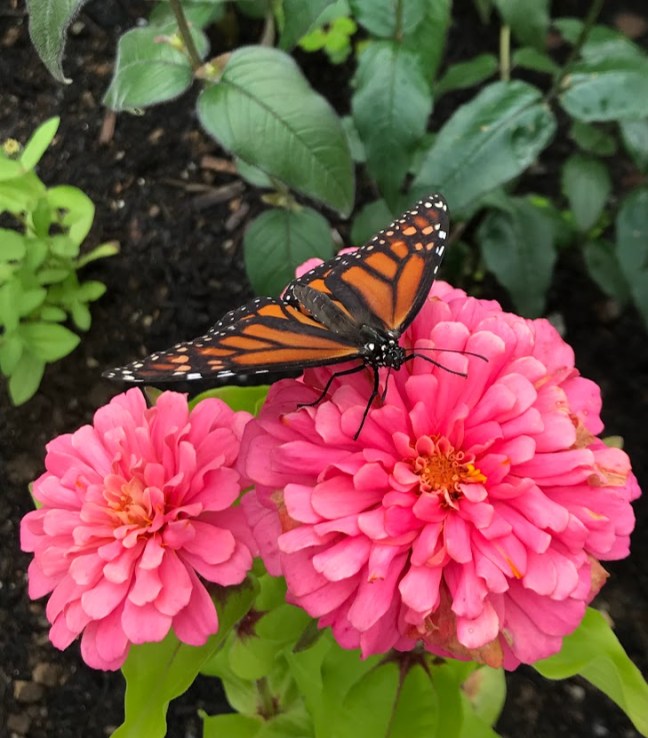
I have been captivated by the story of the Butterfly Effect, a metaphor of a butterfly flapping its wings in Brazil and setting off a tornado in Texas. The metaphor originated with Edward Lorenz, a meteorologist and mathematician, in the 1960s and describes how subtle changes in conditions in one area of the world might affect weather patterns in distant regions. It has become a central idea in chaos theory and is now applied widely beyond meteorology. It reminds us that in complex, interconnected systems, such as our families, workplaces, towns, cities, and countries, small actions can have large, unintended, and unforeseeable consequences.
For instance, a stranger honks at me in traffic. “What an idiot,” I think. “Obviously, I can’t move.” I stew over his disrespect all the way to the grocery store, and become impatient and out of sorts, so when the cashier is slow to scan my items, I snap at her. She remains silent but rolls her eyes at the bagger. He’s a teenager on his first summer job and thinks what a rude old woman I am. He worries about the next senior-citizen customer’s possible negative attitude as he continues to ruminate on my discourtesy, so when she checks out, he throws her purchases into her bags without paying attention. When she gets home, the peaches are bruised, and the tomato he threw on the bottom is squashed. She remembers that a high school kid packed her purchases and vows the next time she shops there she’ll avoid baggers under twenty-five. She files a complaint with the store, and the manager calls all the teenage employees into his office, accusing them of poor job performance. On and on it goes.
The Fifth Remembrance asks us to live as if every moment and how we use it matters. It advises self-awareness and other-awareness. Each of us has a unique effect on the world, a unique contribution to make. As your mind hums with thoughts, your tongue flaps with words, and your hands busily build and tear down, what energy is being transmitted to the next person, the next town, state, country, planet, and universe?
Think about it. When you are dead, and your body has disintegrated, what energy will you leave behind? The Fifth Remembrance reminds us that we continue to impact our complex interconnected world even after death. Small actions ripple outward even beyond our lifetime. My metaphorical wings may create a tornado or a cooling summer breeze, war or peace, hatred or love.
Questions for reflection: What energy am I putting out into the world? How do I want to continue after I die?