81 Days with the Tao: Verse 4

“The Tao is like a well;

used but never used up.

It is like the eternal void;

filled with infinite possibilities.”

In these days of drought and climate change, wells can run dry, so the metaphor doesn’t work as well as it once did. But the meaning remains: The Tao is inexhaustible.

But the void? Completely empty space. Nothingness. That’s another thing altogether. This metaphor perfectly captures the Tao’s limitlessness.

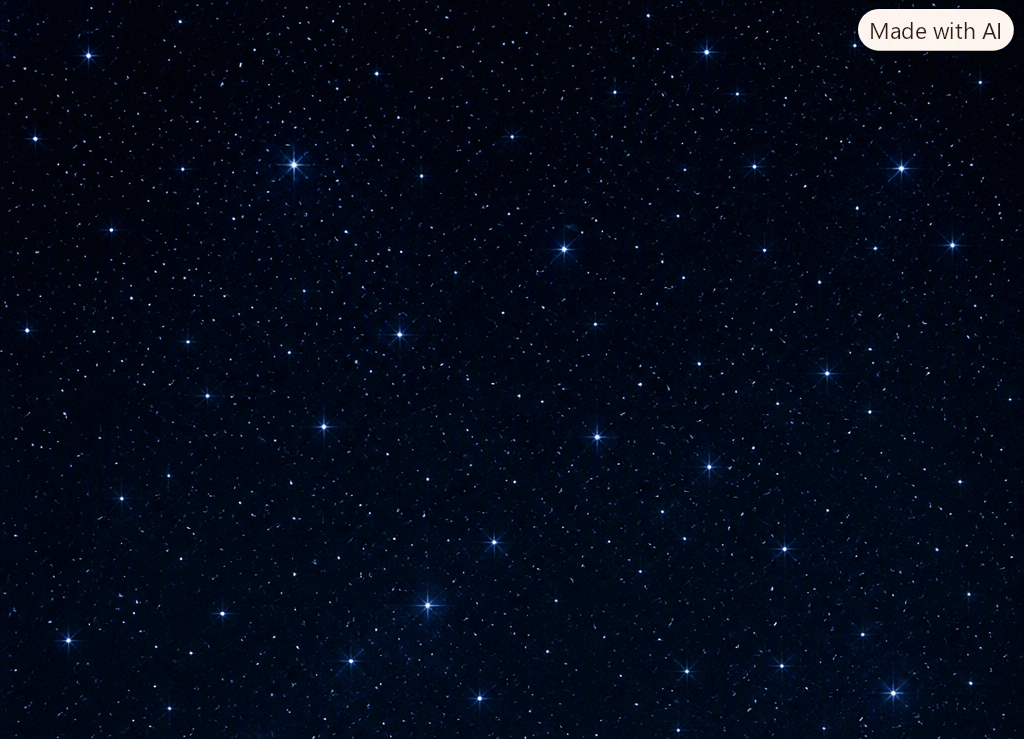
I imagine a night sky, black, empty, without stars. I imagine universes being born from this emptiness, this nothingness—innumerable planets, with incalculable possibilities for life. I imagine our planet, bringing forth all its diversity from the largest mountains to the tiniest grains of sand, from viruses and bacteria to dinosaurs and elephants. Everything is born from the void. Over eons, I, too, have come from the void; so have you.

I think about the proposition that emptiness is the source of all possibility. Makes sense to me. When nothing exists, everything is possible. When nothing is occupying a space, whether that space is physical, mental, or emotional, there is the potential for anything to be born into it. If the cosmos arises from emptiness, perhaps the small empty spaces I open in my life will provide room for creative possibilities.

Lately I’ve been emptying my space, the space of my days, the space of my mind and heart. I’m even trying to empty some space in my home. I’ve been doing so with the long view of my ultimate death. I’ve been letting go of activities, commitments, and objects, trying to create space for possibilities in my life. I’ve been trying to make fewer plans and avoid new projects and obligations. Instead of striving toward a goal, I’m opening time to do nothing: unprogrammed time, a void, if you will.

I’m wondering what might be born into this freed-up space. Never mind infinite possibilities; at my age, as a woman, in this time and place, I’m dreaming about even finite possibilities. What might be born in my new spaciousness? Authenticity, love, humility, insight? Such appealing possibilities! Might there also be pain, loneliness, boredom, and meaninglessness?

That’s the thing about the void. Anything can rush in to fill it. I’m not going to try to soften this reality for myself or for you. Do we want to open to whatever possibilities manifest—welcoming, accepting, learning, and adapting to them?

Unlike many people I know, I’m rather partial to the popular phrase, “It is what it is.”

Here’s the Taoist parable behind that modern-day adage, which I believe captures the spirit of the lines from Verse 4 at the top of this post.  

A farmer’s horse runs away. His neighbors come to sympathize, saying, “Too bad, you lost your horse.” He replies, “We’ll see,” or “It is what it is.” The next day, his horse returns, bringing with it three wild stallions. His neighbors stop by to say, “What good luck!” He responds, “We’ll see,” or “It is what it is.” A few days later, when his son tries to tame one of the stallions, he falls off and breaks his leg. The neighbors come again and express their sympathy: “What will you do without your son to help you on the farm?” The farmer replies, “We’ll see,” or “It is what it is.” A little while later, the army press gang shows up to conscript his son, but since he is injured, they leave him alone and move on. And so on and so forth.

The farmer’s openness to whatever arises mirrors the Tao’s quality of entertaining infinite possibilities without judging any as good or bad.

It’s the nature of possibility that you can’t know exactly what it will mean or how it will turn out. As Alan Watts, an expert on Taoism, sums up: “The whole process of nature is an integrated process of immense complexity, and it’s really impossible to tell whether anything that happens in it is good or bad — because you never know what will be the consequence of the misfortune; or, you never know what will be the consequences of good fortune.”

The Tao is like the eternal void: filled with infinite possibilities. So I’ll keep making room, perhaps not for infinite possibilities, but for the few that matter most to me at this stage in my life—and hope to greet whatever arises with a calm “It is what it is,” or “We’ll see.”
Third Remembrance: Inconceivable Certainty

Moriah, you are going to die.

No, really. Seriously. You are going to die.

This is the one thing you can be certain of.

Death is inconceivable, unimaginable, yet certain. That is the paradox: something that happens to every one of us—something we have known about since our minds became capable of self-awareness—remains fundamentally unknowable.

How do we respond to such inconceivable certainty?

First, by contemplating it as little as possible. Conventional wisdom encourages us to avoid thinking about death, to live as though we will continue indefinitely. Several readers have told me that my posts on aging and death are too much, too intense to dwell upon. They feel compelled to look away.

I understand. The temptation to look away is powerful.

Yet I am convinced that death, the one certainty, deserves a sustained and respectful gaze.

Real-life encounters with death may be frightening, ugly, mundane, or occasionally peaceful, but they reveal little about what dying actually feels like. Death is always happening to someone else, and we cannot enter another person’s experience.

For several years, I served as a hospice volunteer and kept vigil at many deathbeds. During long hours, often in the middle of the night, I watched the work of dying. I hoped these experiences would grant me insight into its mystery, but death remains incomprehensible. What I carried away instead was another paradoxical truth: death is both my unique work and completely beyond my control.

Some people seek understanding through stories of near-death experiences, many of which describe light, warmth, joy, and the presence of loved ones. One friend found comfort in the belief that her beloved grandmother and several cherished pets would greet her when she died. Yet just before her final breath, she became conscious, looked around, and asked, “Where is everyone? I thought they would have come for me?”

Rather than confronting death directly, we often surround it with metaphors. These images may comfort us, but they are necessarily imperfect because we do not know what they point to. Common metaphors include journeys (“walking each other home”), sleep and rest (“every falling asleep is a little death”), transformations (“passing away”), thresholds (the pearly gates), personifications (death as a thief), and natural cycles (winter as the season of death). While intellectually interesting, they all seem like attempts to describe what ultimately resists description.

Despite all the pain, sadness, disappointment, and failure I have experienced—along with joy, of course—I do not want life to end. I want this awareness, this self I call me, to continue in some form. Though I am tired and will become more so as I age, I cannot truly conceive of my own nonexistence. Some people speak of death as peace or rest. I worry instead that it might resemble a never-ending anxiety dream—something with which I am intimately familiar—when I would much prefer it to resemble the complete blankness of sedation for a medical procedure.

This raises a knotty question: Moriah, are you afraid of death?

Not exactly.

I am afraid of pain, disfigurement, suffocation, cold, hunger, sleeplessness, and shame. But death itself? How can I fear something I cannot imagine?

Over time, I have replaced fear with curiosity and experimented with different theories about what death might be.

I once believed in heaven and hell. For a while, those ideas fit comfortably. Eventually, however, they lost their hold on me as I came to see many religious traditions as attempts to understand the divine through human images and characteristics.

As I explored Buddhism and Taoism, other possibilities became more compelling. At present, two concepts compete for my allegiance.

The first is death as nothingness: a vast, dark void. The metaphor for this theory is outer space. I imagine myself floating endlessly in a 1980s-style spacesuit through silent, sightless, senseless emptiness. Yet even here, some faint awareness remains—not awareness of anything, but awareness of nothingness itself.

The second theory is inspired by the law of conservation of energy. In this view, the consciousness I now experience as Moriah does not simply end but transforms into something entirely new and unrecognizable, even to itself. My physical remains return to the earth or ocean, nourishing other forms of life, while whatever energetic essence animates me returns to the source from which all things arise.

I am not especially a fan of The Black Eyed Peas, but the opening track on their 2009 album The E.N.D. has captured my imagination. The lyrics begin:

“Welcome, welcome to the E.N.D. Do not panic. There is nothing to fear. Everything around you is changing. Nothing stays the same … The energy never dies.”

The Buddhist teaching of “no birth, no death” offers a similar perspective. Life and death are not singular events but aspects of an ongoing process of transformation. The concentrated energy that is presently me will disperse and perhaps reassemble into something that will no longer be identifiable as Moriah. Yet it will not disappear.

In that sense, I am infinite.

These theories satisfy my longing for connection with the source of life. They also address my incomprehension of annihilation by allowing for some form of continuation, whether formed or formless.

So I have looked death in the face—there is another metaphor—as best I can for now. I have acknowledged its certainty and its mystery. I have admitted my worry, sadness, and sense of loss when contemplating the end of my life. I have indulged my curiosity. Yet every attempt to explain death through language, metaphor, or imagination ultimately falls short.

I know I will die.

I cannot imagine what death is.

And I cannot look away from it.

What does all this contemplation of death mean for how I live today? Does it shape my daily choices and attitudes?

I will explore those questions in the next post: Alive with Death.

Questions for Reflection: How do we live with absolute certainty about something we cannot imagine? What is your own theory about what happens at death, and what emotional need does that theory satisfy?