81 Days with the Tao: Verse 1

“Darkness within darkness,

the gateway to all understanding.”

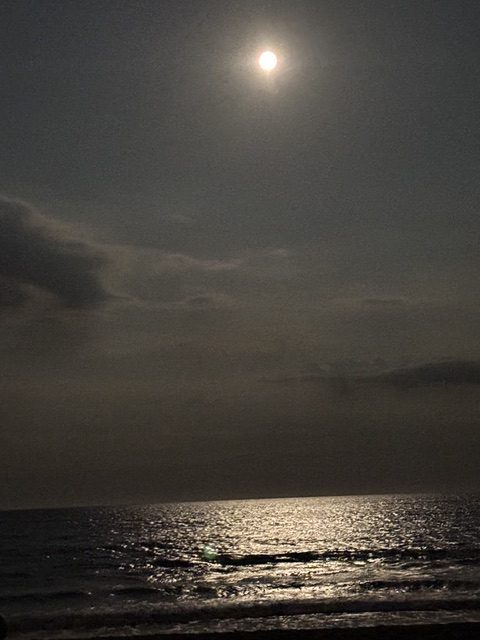
The Source, the Tao, is darkness—the birthplace of everything. We come from it, and we return to it. It is the non-being from which our being arises. Close your eyes. Go inside your own dark center and draw near to the center of all.

“Free from desire, you realize the mystery.

Caught in desire, you see only the manifestations.

Yet mystery and manifestations

arise from the same source.” 

—Stephen Mitchell, Tao Te Ching, Harper Perennial Modern

Classics, 1988

Desire is the human condition. So, I, always desiring, am caught among the manifestations, while longing for the mystery. The ultimate desire is to be free from desire itself. How impossible that seems, but only then can I comprehend the mystery. Only then can I realize it; only then is it realized in me. Pass through the gateway; enter the darkness. Perhaps understanding waits there.

I wake up in the darkness. It’s two in the morning. Are you awake too?

It’s dark inside and around me. The sheets are cool, like darkness itself. I lie there, listening. The house is still. Yet I’ve been struggling in my dreams to persuade, convince, free myself from something, or resolve something, and it feels impossible. There is no way out. I am trapped. I know the only answer is to surrender, but I don’t know how. I’m on the verge of passing through the gateway into complete darkness. If I take that step, will I realize the mystery?

“Yet,” that freeing word! “Yet,” that promise of release and deliverance! Ah, “Mystery and manifestations arise from the same source.”  And that source is darkness; blessed, holy, enfolding—the gateway to all understanding. Abide in the darkness, realize the mystery.
81 Days with the Tao: Reflections on the Tao Te Ching

Introduction:

The Tao Te Ching, the classical Chinese foundational text of religious and philosophical Taoism (pronounced Daoism), is believed to have originated around 300 BCE and is traditionally attributed to the sage Lao Tzu. Its title translates as “The Book of the Way and its Virtue.” Taoism centers on living in harmony with the Tao — the natural, spontaneous, underlying way of the universe.

The Tao Te Ching has eighty-one chapters, or verses, most of them shorter than half a page, making them excellent texts for reflection or meditation. I think of the verses, or lines within them, as koans, paradoxical sayings that encapsulate a truth which cannot be grasped through logical reasoning.

I’ve been reading the Tao Te Ching daily for several years—one verse each day, sometimes the same verse for several days in a row. After reading, I close the book (the Stephen Mitchell translation) and reflect on what the words mean in my present situation. Often, a line or two will stand out, and I focus my reflection on those. Sometimes the verse as a whole speaks to me. When I finish reading verse eighty-one, I begin again.

I don’t fully understand the sayings in the Tao Te Ching and the wisdom behind them, but I catch glimpses of reality and hints of the truth. I try to apply the wisdom I glean to whatever is happening in my life at that moment, so each time I read them, they mean something slightly different. I seek to understand and apply them through meditation and writing.

So, here, for the next eighty-one days, are my brief reflections on the Book of the Way and Its Virtue. I share them in the hope they may resonate with your personal experience and encourage you to seek The Way yourself. If your reflections lead you to other or contradictory insights, please share them with me and my readers by making a comment.

Because I don’t quote the entire verse in my blog post, I encourage you to get a copy of Stephen Mitchell’s book and follow along.

Please join me on this eighty-one-day journey.