
81 Days with the Tao: Verse 3

“Practice non-doing,

and everything will fall into place.”

—Stephen Mitchell, Tao Te Ching, Harper Perennial Modern

Classics, 1988

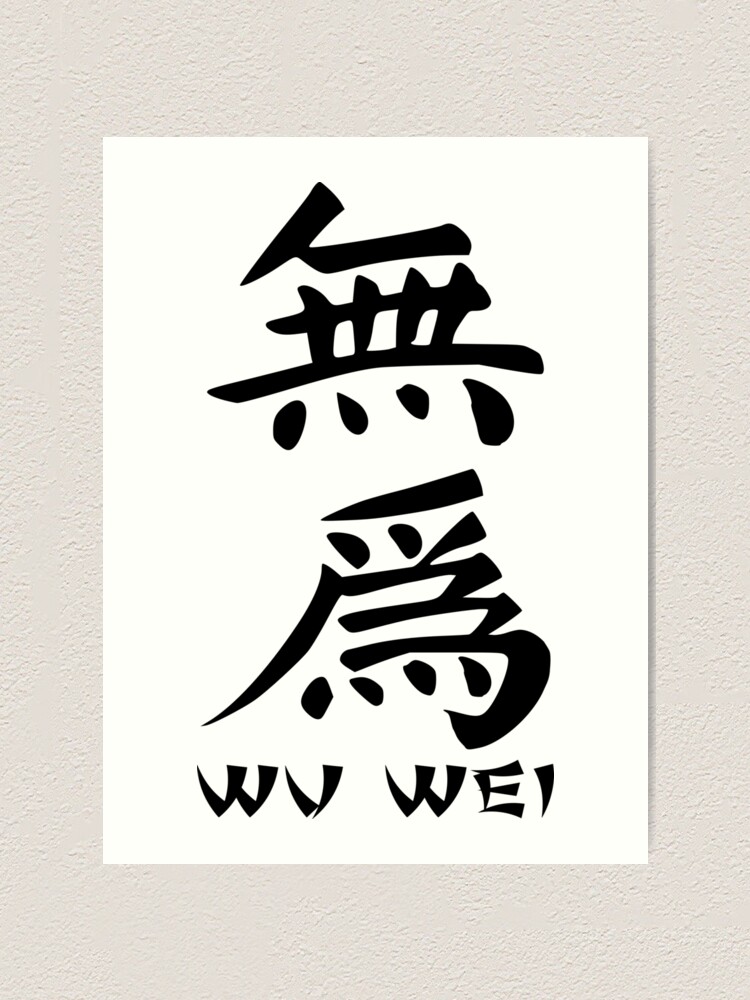
The closing sentence of verse three. It seems unrelated to the lines that come before it. Those lines are an utter puzzle to me, so I focus on the familiar: a restatement of Wu Wei. There’s much more for me to consider on this topic. I sense an invitation to go deeper, to grapple further.

Practice non-doing, non-intervening, non-controlling, non-forcing. How many ways can I think of to say it?

Is it alright not to intervene when a person, a group, or a situation is crying out for justice? Is it alright not to do something to try to save a life? Everything will fall into place? Often what falls into place seems cruel, unjust, or evil. Is it alright not to resist cruelty, injustice, and evil? Or is there some elusive balance to be found, some middle ground between getting involved whole hog, and non-doing? 

I know there are arguments on both sides: violent intervention (as in World War II) or non-violent protest, as in Martin Luther King’s marches. But to do nothing? Not to fight if your country is invaded! Not to peacefully protest the seizure of power and violation of human and civil rights by a corrupt dictator! Not to speak out against racism, sexism, ageism! Not to jump into a river to save a drowning child!

Still, I have done all these things: resisted, spoken out, protested, jumped in—though not into a river— to what avail? Was doing them important even though they brought no change?

Suddenly a way out of this quandary occurs to me. Could the translation of this principle from the original Chinese be the problem here? Not knowing a single word of Chinese, I choose to believe that Lao Tzu was talking about non-forcing, not non-doing. If non-doing can’t be reconciled with justice, perhaps non-forcing offers a different path forward. So, practice non-forcing by following the natural way of things as they fall into place. Much better! But how do we know what the natural way of things is? We are so far from it now.

My attempts to understand this Taoist koan are wearing down my intellectual powers and my wordsmithing skills. I pray for relief, and the phrase “open yourself to the Tao” pops into my mind. Now, I feel my heart unclench, and my body relax. A cool breeze seems to blow through my mind. I let go of the need to know, for sure. I bow to the questions, the dilemmas, knowing we will spar again in the darkness of some future early morning.
81 Days with the Tao: Verse 2

Some lines in the Tao Te Ching bring me up short, not because they’re cryptic, but because they’re shockingly simple:

“Things arise, and she lets them come;

things disappear and she lets them go.”

—Stephen Mitchell, Tao Te Ching, Harper Perennial Modern

Classics, 1988

My immediate gut reaction is, “What a passive attitude towards life and the world!”

It seems to recommend no resistance to what is, at a time when what is feels oppressive and unjust. It suggests letting go of what no longer is, never truly was, or what you wish would be. Let things come and when they disappear, let them go. Is this political and emotional quietism?

I know from reading the rest of the Tao Te Ching that this attitude is a central tenet of Taoism—Wu Wei, non-forcing, effortless action. It’s interesting that it appears so early, in verse two, counseling us from the start to align effortlessly with the ebb and flow of the natural world rather than swimming against the current.

The emphasis, however, is on effortlessness, not actionlessness. Later in the manuscript, I know there will be words about right action arising harmoniously, naturally and effortlessly, eschewing force.

These words encourage me to watch, wait, carefully observe, to understand the way of things, the natural flow. They ask me to cultivate patience and responsiveness rather than reactivity. They say, don’t jump to conclusions, give it time, don’t rush to intervene. But oh, habits of a lifetime are hard to change!

Later in Verse 2:

“When her work is done, she forgets it.

That is why it lasts forever.”

—Stephen Mitchell, Tao Te Ching, Harper Perennial Modern

Classics, 1988

Has all my work, all my striving, come to anything? At death, I’ll have to let it go. Will anyone remember it? Should I forget it too, as this verse counsels? What does it mean that work done and forgotten lasts forever? Does it endure in some hidden, mysterious way? I wrote a blog post a while ago on the Butterfly Effect—the way the tiniest flap of a butterfly’s wings can change things on the other side of the world. Is that what lasting forever means?

I know the message of these lines will return later in the text, counseling me to do whatever I discern as my authentic work in any situation and then let go of the outcome.

I also know that Taoist teachings, like Zen koans, employ paradox—action through non-action, strength through softness, lasting impact through forgetting. And so I stop trying to figure out what the text means and let the words fall like gentle rain on the thirsty ground of my heart.

Let it come, let it go. Let it ebb, let it flow.