Stillness, Silence, and Solitude II

Continued

Solitude

At home, I am not solitary. I live with my spouse, my dog, and two cats, in a vibrant retirement community in a college town where intellectual work, art, theater, and music flourish. Tourists stroll the streets in summer. I am always meeting people I know well—or not at all. This social identity feels so natural, so me, that it is hard to believe it is constructed or conditioned.

Entering solitude, for me, is like going home. Though I am far from my physical home, I feel more at home here. Alone, I am more aware of my feelings, more curious, open, at ease, and forgiving. In the quiet of this cold winter morning, I ask: Who is my essential self? Is it distinct from my conditioned self? Does my essence emerge in solitude, or in relationship with others, or somehow in both? The witness self—the continuous, conscious observer—appears more readily for me in solitude.

Still, I must be careful. I am convinced that truth lies in balance rather than extremes. Perhaps I value solitude so deeply because I have so little of it.

Stillness

I arrived with the hope that my days alone would be unstructured, guided by the heart’s promptings. I imagined staying in my pajamas all day, doing nothing at all. That fantasy dissolved when I decided to bring the dog. I have meandered from one activity to another, discovering that it is far easier to imagine being still than to be still.

What do I want from stillness? The word that arises first is settling. I long for the persistent sense of inner agitation to give way to calm. Through meditation, I have learned that this happens when I sit still for long periods. Buddhist teachings liken the mind to a muddy pond: when left undisturbed, the sediment slowly settles, and the water clears. In my own experience, my body settles first, then my mind, and finally my emotions; clarity emerges.

With clarity, my actions become more intentional. This week, in my efforts to be still, I have taken special care to cook nourishing food and arrange it beautifully in the mismatched bowls and plates I found in the cupboards. I eat slowly—and, of course, silently—savoring each mouthful, noticing flavors and textures, surprised and grateful. No conversation distracts me from chewing thoroughly, to the relief of my delicate digestive system.

I read slowly, reflecting on what I read, appreciating the symmetry and beauty of language, and letting words sink into my consciousness, hoping they will water the seeds of my own writing.

Slowness, I tell myself, is the first step toward stillness, as the dog and I head out on our thrice-daily walks. Snow, ice, and mud slow us down, and we accept and adapt to them all. He stops often to sniff each new scent. I stop too—standing still, looking around, breathing, inhabiting the moment.

Fast and slow, motion and stillness, cannot exist without each other. Neither is inherently good or bad; each has its season, even if I have my preferences.

Silence

It almost goes without saying that outer silence supports inner silence. Alone and still, silence becomes tangible. I soak it in, treasuring it. I resent the heater kicking on with its low hum, the sound of the upstairs neighbor’s truck pulling into the driveway, his boots pounding up the stairs, the clicking of my keyboard as I type. When these sounds subside, I sink into the silence and luxuriate in its nothingness. It wraps around me like the heat in an empty sauna.

For a moment, I imagine never speaking again, never hearing another word. I contemplate the silent emptiness of death, and while I imagine it, I notice a quiet gratitude arise. Then the heater kicks on once more, and I feel my body tense—just slightly—reminding me how much stress accumulates when we are constantly bombarded by sound. How restorative silence feels, with its sisters, solitude and stillness.

And yet, silence is not the same for everyone. If I could not hear, would I long for sound? My partner is functionally deaf. Without her hearing aids, she hears nothing at all. Deaf since early childhood, her experience of silence is marked by alienation, misunderstanding, and disconnection. For her, sound can be orienting and connecting—or overwhelming. She reminds me that silence, like solitude, is not inherently sacred; its meaning depends entirely on context.

As I bring these reflections to a close, I search my OneDrive for a poem I wrote some time ago and read it carefully, recalling the feelings behind the words.


THREE MAGI

Stillness
Silence
Solitude

Three Magi, wise and noble,
Enticed
By intuition,
A common secret dream.
Set off to find the source of all that Is—
of love,
of hope,
of truth.

Stillness ambles imperceptibly.
Motionless, she travels far—
deeper,
nearer,
clearer.

Silence speaks no words,
Adds nothing to the frantic roar
of hate,
despair,
and lies.

Solitude bears destiny as she strides forth.
Knows birth and death and all between alone. Her heart
a pulsing,
throbbing,
longing.

Three Magi,
seeking their soul’s star,
walk home.


What is the soul’s star I seek during this week of stillness, silence, and solitude? As I ponder the question, my witness-self watches thought-clouds drift across the sky of my mind: essential, real, true, authentic, love, compassion, home. Any of these could be my soul’s star. And these three wise magi—Stillness, Silence, and Solitude—are my companions and guides as I walk home.

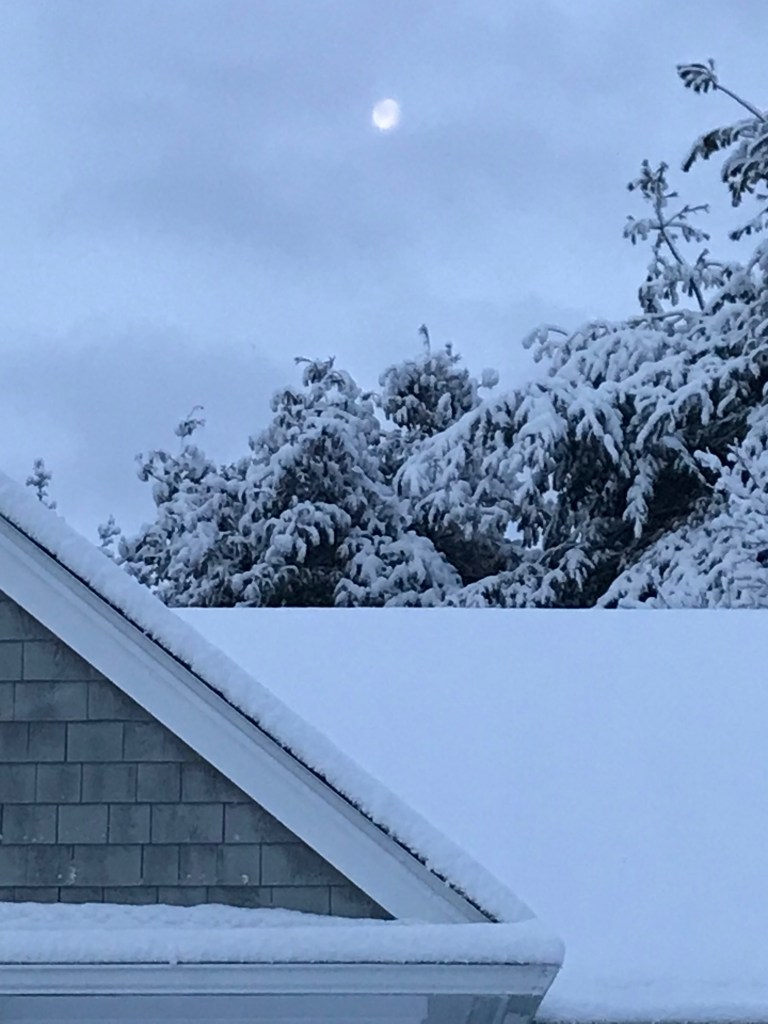
I rise from the computer and walk slowly to the kitchen to boil more water for tea. The kettle whistles, breaking the silence. The dog stirs, stretches, and hops down from his chair to follow me. I look out the window at the fresh snowfall, still undisturbed. I remember that I have a few more days alone before rejoining those whose lives are bound to mine. I give thanks.

I give thanks.


Author’s Note

This essay grew out of a week-long solitary retreat in central Maine in 2023, and reflects my ongoing spiritual inquiry into stillness, silence, and solitude. Written as contemplative nonfiction, it blends my lived experience with reflective practice. My intention is not to idealize the three s’s, but to examine what they offer when approached with curiosity, humility, and balance.

Stillness, Silence, and Solitude

I wake slowly and fitfully in what I sense is the middle of the night, in an unfamiliar, semi-dark, silent room. I toss and turn in the warm bed until I feel the need to pee, then roll onto my right side to get up. If I were at home, I would open my eyes to the digital clock on the bedside table—but I’m not at home. I’m on a week-long solitary retreat in an Airbnb in central Maine.

The retreat is part of my spiritual theme for 2023: Stillness, Silence, and Solitude. I was drawn to those words at the end of 2022—drawn by a deep longing for those states themselves, and for the transformation they might cause within me if I were to embrace them. Once this visceral yearning rose to consciousness, my practical nature kicked in, and I began looking for a place to be alone. I searched Airbnb and VRBO and ended up with a cozy apartment in a small town about half an hour—and a world—away from home.

No familiar glowing red numbers orient me in the dead of this night, so I make a deliberate effort to determine the time. I reach for my iPhone. 1:01 a.m. At the same moment, I catch a glimpse of an email notification that arrived after I turned out the light at about 9:30. It says:

“I completely agree with Daisy’s approach….”

Suddenly, I am wide awake. Why does this sentence jolt me so fully into consciousness? Because I disagree with Daisy’s approach—or at least, yesterday I had the uneasy feeling that it was naïve, lazy, or even a cop-out. Now my mind is engaged, and experience has taught me that the likelihood of falling back asleep is slim to none.

So I get up to pee, stewing mildly about Daisy’s approach and everyone’s easy acceptance of it, then return to bed and pull the warm covers over my chilled body. I lie there for a while, breathing deeply and saying to myself, Let it go, let it go, over and over, in rhythm with my breath. The stillness of my body and the measured breathing are soothing, and I almost believe I will slip back into sleep. Though my body is calm, my alert mind witnesses my feelings about Daisy’s approach and the emailer’s response, weighing my options for responding—or not.

Finally, I decide to see this early-morning waking as an opportunity rather than a dreary inconvenience—to view Daisy’s approach not as a problem to be solved, but as a stimulus for exploring my spiritual theme in the first hours of this new day. I get up, put on my long johns and warmest wool sweater, and boil water for tea. I intend to meditate first, then write.

After an hour of silent sitting meditation, reading, and journalling—unexceptional, much like my usual start to the day—I feel the urge to write an essay about where I am and why. I record the first moments of this day, an exercise in orienting myself to the here and now. Then I broaden my field of awareness to the larger context of this small Maine town.

As we drove in, it appeared extremely conservative. “How did you know that?” someone asked me later. I answered by pointing to the many American flags displayed everywhere, several with black-and-white stripes and a few bearing the “thin blue line” that often signals support for the police and opposition to Black Lives Matter. There were almost no cars. Pickup trucks sped past me on my walks with the dog. All of this, in my liberal mind, added up to conservatism—perhaps even of the radical sort.

And yet, while self-consciously practicing open-mindedness—and briefly abandoning my pursuit of silence and solitude—I paused to speak with a few locals during my walks. A young fireman at a nearby station waved at me. Thinking we might have something in common, since my family includes a couple of firefighters, I approached him to chat. I began by saying I was a stranger. He told me, among other things, that he was new to town as well and found the people friendly and welcoming. I felt a fresh breeze move through my mind.

Early in the week, I went to the corner store in search of a vegetable peeler. They didn’t have one for sale and directed me to another shop, a ten-minute walk away. As I headed up the road, I heard a shout behind me: “Hey, lady!” I turned to see the young woman from the store waving a vegetable peeler.

“You can have this one,” she said. “We don’t use it anyway.”

“I’ll bring it right back after I peel the sweet potatoes,” I replied.

“No—keep it. Leave it in the B&B for the next occupant.”

We wished each other a nice day, and I continued on my way, struck by her generosity. Nothing, it seems, is as unambiguous as it first appears. I am as guilty of stereotyping as the next person—quick to jump to conclusions based on first impressions, preconceived ideas, and unexamined prejudices.

But the title of this essay is Stillness, Silence, and Solitude. So, I pause my typing to ask myself: what do these insights have to do with those three words? Immediately, it occurs to me that I might not have arrived at these understandings without the space to reflect that stillness, silence, and solitude are providing.

My aim in seeking this trinity of s’s is to encounter my authentic self. Who am I when I am not doing, talking, or relating? I have spent most of my life engaged in activity and conversation. We all have. I wonder who I might be if I sat still, stopped talking, and lived alone. There is a rich spiritual heritage of solitaries who withdrew to caves and deserts—Jesus among them, at least briefly—to face themselves and seek meaning and purpose. Could I place myself, from time to time, in that lineage to do the same, and to better understand what motivates me, why I react as I do, and whether I might want to change some ingrained patterns?

Five days into this experiment, I ask myself: what am I discovering?

To be continued tomorrow

One Word

Carolyn, a friend and blogger I deeply respect and whose posts I follow avidly, has recently revamped her blog site.  It’s now called Your One Word. The idea is that you select, through a process of inner listening, a word that will be a hallmark of your life for a year.  Hallmark is, for this purpose, defined as a distinguishing characteristic, trait, or feature.  It may be a quality or virtue you aspire to, a practice you want to embrace, or something you want to understand more deeply.  Through reflection, active noticing, perhaps even study, you will let the meaning of the word unfold in your daily life for a year, checking in monthly or even weekly to become aware of its effect on your thoughts, dreams, and actions.

Carolyn provides some helpful resources for choosing your word and working with it regularly.

My word for 2021 is REST.  My word for 2020 was “slowly,” but I was a dismal failure at incorporating it into my life.  Anyone who knows me will laugh at my 2020 choice because I do everything as fast as possible – walk, eat, exercise, clean, shower, dry my hair, read, type, cook…ad infinitum. One thing I learned from “slowly” last year was how fast is my usual pace.  I also observed others around me, particularly my partner, and noticed how graceful and gentle moving slowly is by comparison.

I am 68 now, and I’m tired, in general, and in particular of going fast. So, without moving too far from last year’s aspiration, I chose “rest” for 2021, or rather, it chose me.  Already, with Carolyn’s help and inspiration, I am learning about what rest means for me.

I want to share with you the list of questions that arose when I began to explore my word:

  • What is the definition of rest? What are some synonyms?
  • How does rest show up in my hobbies: photography, writing, coloring, card design?
  • How is rest affecting my chronic pain?
  • Has rest helped me to move more slowly?
  • Am I struggling against something? Can I stop and rest?
  • When I have rested, what have I noticed?
  • Does rest help me to let go?
  • How are rest, solitude, and retreat related?
  • What three memories of rest can I recall this week, this month?
  • Have I seen examples of rest in nature? In others? What can I learn from them?
  • How are rest and saying “no” related for me?
  • How are rest and mindfulness related?
  • And, for the sake of this blog, how is rest related to “respect?”

For me, rest has an essential relationship with self-respect.  It gets at a part of my nature that has always been troublesome – my difficulty setting limits.  Limits on my workday’s length and intensity, limits on my care for others, limits on the physical demands I place on my body. Getting older, if you pay attention, can teach you vital lessons about limits.

This year, I hope to practice self-respect by discovering what rest is and incorporating it into my physical, mental, relational, and spiritual life.

Is “one word” calling you?